
I was super thrilled when Philippa Howden-Chapman invited me to contribute to a new book, Sharing the Sun: Empowering small-scale renewable generation in Aotearoa. Edited by Helen Viggers, Keriata Stuart, and Philippa, it’s a critical look at how we can fix our electricity system to work for people, not just profits.
The book paints a stark picture of our current “gentailer” model, where high prices and regulatory barriers lock families into energy hardship. It explores the urgent need for distributed energy resources (like rooftop solar) and features case studies on community resilience—like how solar-equipped homes kept the lights on during Cyclone Gabrielle while the grid failed.
My contribution, Chapter 13, tackles the elephant in the room regarding our transition to a 100% renewable grid. Everyone is talking about generation, but we are missing the real challenge: the massive, wildly expensive problem of seasonal storage. Solar generates a surplus in summer, but how do we power our homes in a dry winter when hydro lakes are low and the sun isn’t shining?
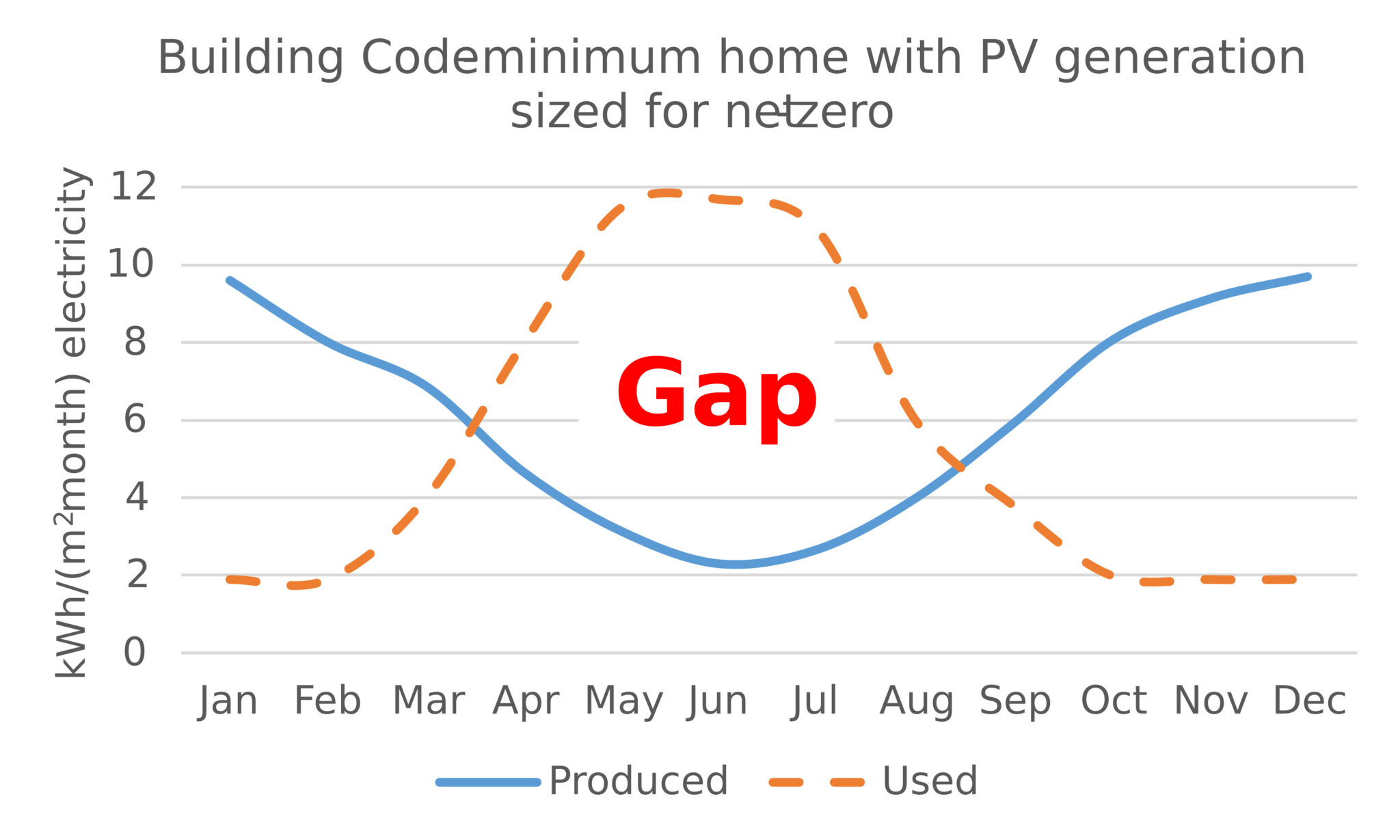
Figure 4: Large gap between production and consumption of electricity for a net-zero building with a correctly sized PV system.
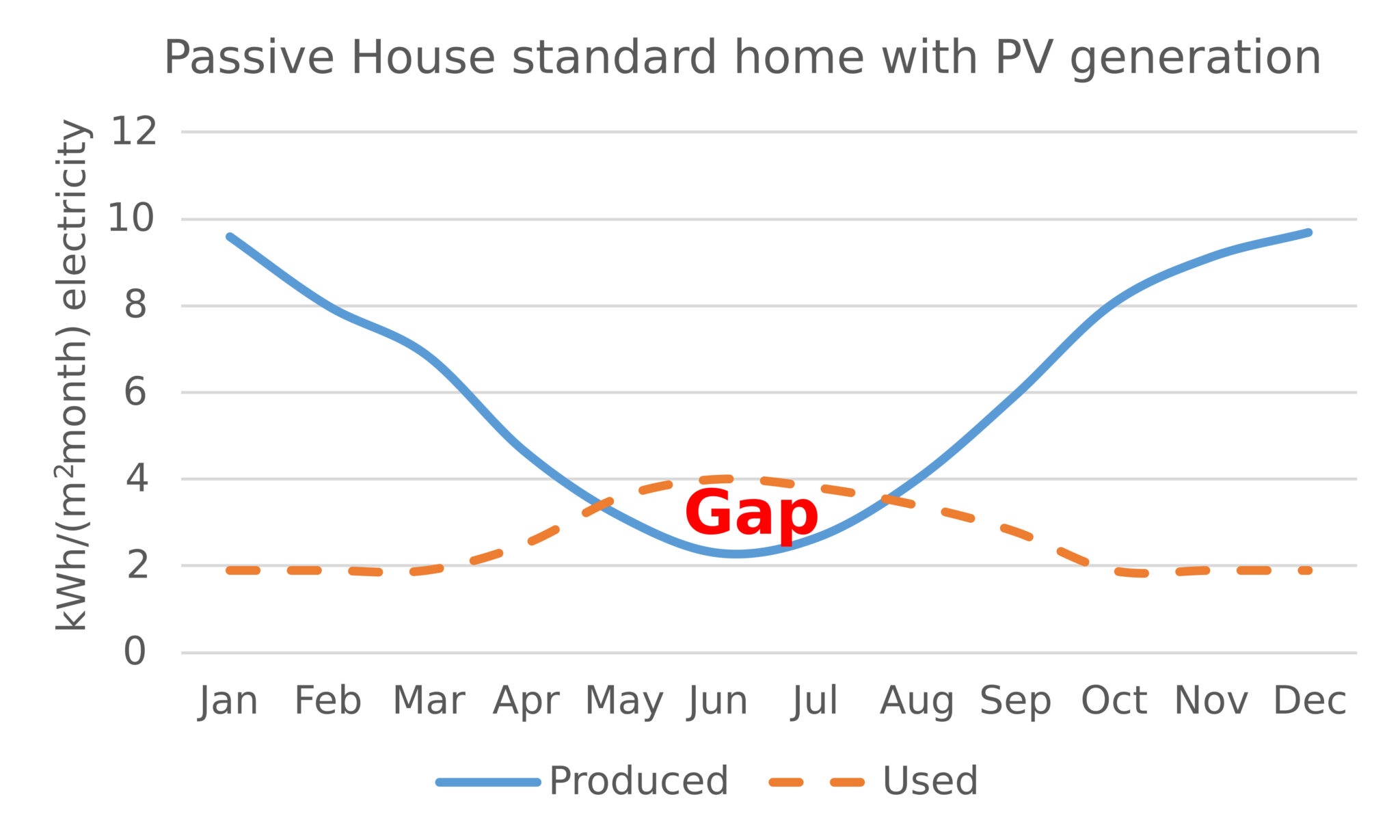
Figure 5: Small gap between production and consumption of electricity for a Passive House with the same PV system as the net zero house in Figure 4.
Figure 4 and 5 from the chapter. The ‘Gap’ is the energy that in a fully renewable grid needs to be stored for six months.
This is why chasing “net-zero” targets can be misleading. The concept creates a split incentive: it treats a kilowatt-hour generated in summer as equal to one needed in winter, completely ignoring the massive cost of storing that energy for months. To fix this, we can design using the Renewable Primary Energy (PER) factor as a simple guide. Unlike net-zero, PER accounts for the real-world losses involved in seasonal storage and the timing of renewable generation.
Focusing on PER as a design target correctly forces us to prioritize the building envelope and hot water system efficiency in the winter (specifically heating and hot water demand). By drastically reducing heating demand through Passive House performance, we slash the winter peak load. This drastically reduces the need for seasonal storage, making the entire renewable grid smaller, cheaper, and actually achievable. That is how we make clean energy truly fair and affordable for all New Zealanders.
The book is currently available through the Steele Roberts website. Worth a read.