
Master the workflow. Avoid the traps. Deliver high-performance homes with confidence.
The team at Sustainable Engineering New Zealand’s leading Passive House certifiers has developed a specialised training programme designed to bridge the gap between theory and practice. This course is the definitive roadmap for professionals ready to master the design and certification of the highest performance homes in the New Zealand/Australian context.
Your Outcome
Transition from theoretical knowledge to professional mastery. Upon completion, you will be able to navigate a streamlined, structured process for taking a single-family home from initial architectural concepts through to successful Passive House certification. This course is specifically designed for professionals preparing to deliver their first or second certified project for a client.
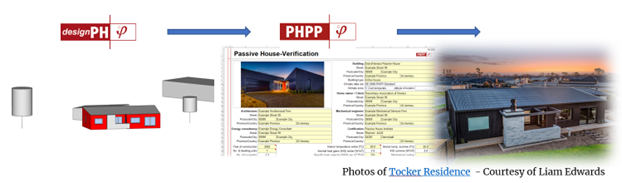
Why This Course?
- Start When You’re Ready: With rolling enrollment, you can begin the moment a client project lands on your desk.
- Self-Paced Flexibility: Designed for busy professionals, the curriculum fits around your deadlines and existing responsibilities.
- Direct Expert Access: Supplement your video learning with one-on-one coaching sessions and an active online forum. Don't just learn—solve real-time project challenges with our certifiers.
- Intuitive Learning: Experience a curriculum that mirrors the real-world design workflow, making the complex simple.
Is This For You?
This course is the "missing link" for:
- CEPH Graduates: If you have completed your Certified Passive House Designer/Consultant training with PHANZ, this course provides the practical pathway to apply that theory.
- Technical Professionals: Ideal for those with backgrounds in building science, physics, or engineering who wish to master PHPP for residential projects.
- Architects & Designers: Aimed at those ready to move beyond "Passive House-lite" to fully certified excellence.
Note: This is a practical, tool-focused course. If you do not have a background in building science, we recommend completing the CEPH course first to ensure you get the most out of this training.
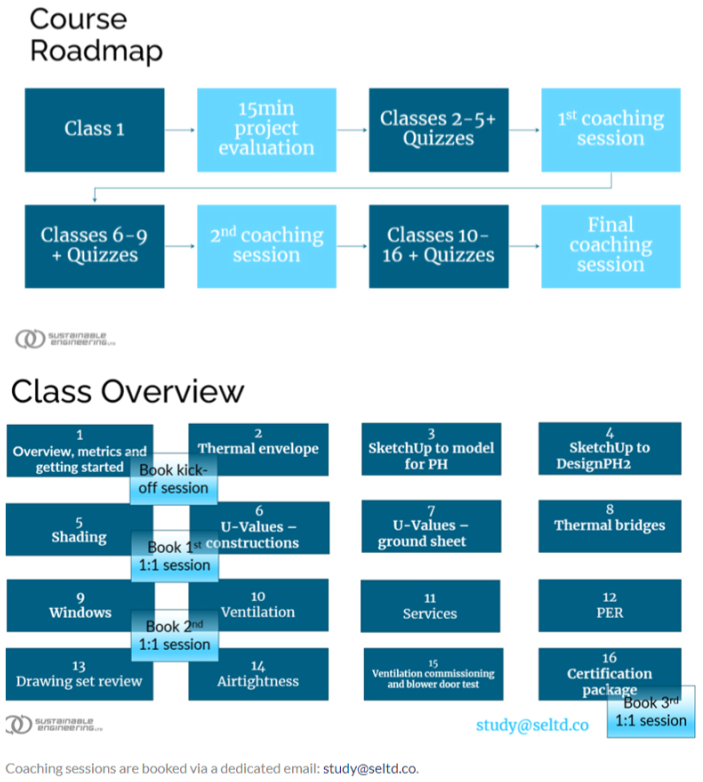
Course Curriculum: A Step-by-Step Blueprint
|
Module |
Topic |
Key Learning Outcomes |
|
1 |
The Roadmap |
Master the documentation process and PHI Certification standards. |
|
2 |
Thermal Envelope |
Accurately define boundaries and estimate thermal mass. |
|
3 |
SketchUp to designPH |
Model simple buildings in SketchUp and optimise for designPH export. |
|
4 |
designPH2 Mastery |
Set window reveals, define TFA, and run accurate shading settings. |
|
5 |
Advanced Shading |
Understand designPH shading standards. Implement seasonal shading and model blinds/shutters with precision. |
|
6 |
U-Values: Construction |
Construct multiple U-values in PHPP using our database of thermal conductivities. Complete worked examples including timber-framed wall, SIP wall/roof and concrete slab floor. Understand the surface conditions and groups in the area sheet to make PHPP easier to use. |
|
7 |
U-Values: Ground |
Master the ground sheet for slab on ground, raft and pod foundations. |
|
8 |
Thermal Bridges |
Identify and design out geometric and material thermal bridges and use the HPCD and manufacturer’s databases to eliminate weak links. |
|
9 |
Windows & Joinery |
Extract data from our database certificates and audit joinery quotes for common errors. Understand project-specific fRsi factors and the implication for window specification. |
|
10 |
Ventilation |
Design simple MVHR system layouts and evaluate non-certified unit and direct kitchen extract impacts. |
|
11 |
Services & DHW |
Model NZ/AU specific heating and cooling, and the "one door rule.” Typical entries for common domestic hot water systems. |
|
12 |
PER (Primary Energy) |
Navigate the PER sheet and understand heat pump limitations. |
|
13 |
Drawing Review |
Conduct constructability reviews and identify assemblies and control layer continuity. |
|
14 |
Airtightness |
Redline air control layers and predict common site-level failures. |
|
15 |
Commissioning |
Master blower door tests and ventilation commissioning protocols. |
|
16 |
The Final Submission |
Assemble a complete, concise, and "certifier-ready" package. |
From the Director
"We have three goals for this course. First, we want more high-quality Passive House designs in New Zealand and Australia, immediately. Second, we want to provide flexibility for professionals with family and work commitments.
Finally, we want your first project to be a success. By avoiding the common traps that lead to stress and lost time, we save you money and ensure a better home for your client. We’d much rather help you prevent a problem than help you fix one."
— Jason Quinn, Director at Sustainable Engineering
Real-World Feedback
"This course is the 'aha moment' for the logical implementation of designPH and PHPP. It’s a breath of fresh air—practical yet technical. The easy-to-follow format and detailed attention to actual activities make it invaluable for anyone serious about high-performance design."
— Richard Walklin, Engineer
Your Investment
Course Fee: $2,600 + GST
Time Commitment: We recommend allocating 2 hours per week for classes, plus 30–40 hours over the duration of the course to work through a real or sample project design.
Required resources and knowledge
- PHPP10.3 or newer (in Excel)
- designPH2.1.10 or newer, running in SketchUp Pro
- Familiarity with Excel and PHPP
- Basic SketchUp skills so as to create building forms and shading. Completing this class is sufficient.
- Basic building science, physics, and construction knowledge such as taught in the Certified Passive House Designer/Consultant (CEPH) classes offered by PHANZ, or equivalent.
- Proficiency in mathematics to senior secondary school level.

Limitations liability and copyRight
This course requires a minimum number of students to be viable. If minimum numbers are not met, Sustainable Engineering will cancel or postpone the course and refund 100% of participants’ course fees. There will be no refunds once the course has begun so it is important that students understand the prerequisites and what is expected of them. This course involves mathematics and physics and assumes participants are familiar with the basics of using a spreadsheet or SketchUp; this will not be taught in class.
If due to circumstances outside of Sustainable Engineering’s control a course session cannot be delivered at the scheduled time, the course will be extended.
The presentations by course leaders will be recorded for the benefit of current and future students. Full recordings of each session (ie including discussion) will be available on request for the purpose of revision— for a limited time and only to the current cohort of students. Participation signifies consent to be recorded.
The course materials including videos represent a significant investment in intellectual property. They are copyright and may not be shared with anyone.