
Project Team
Architecture & Passive House Design Green Perspective Design Studio – gpds.co.nz
Builder Andi Steinemann – steinemann.co.nz
Certifier Sustainable Engineering Ltd – sustainableengineering.co.nz
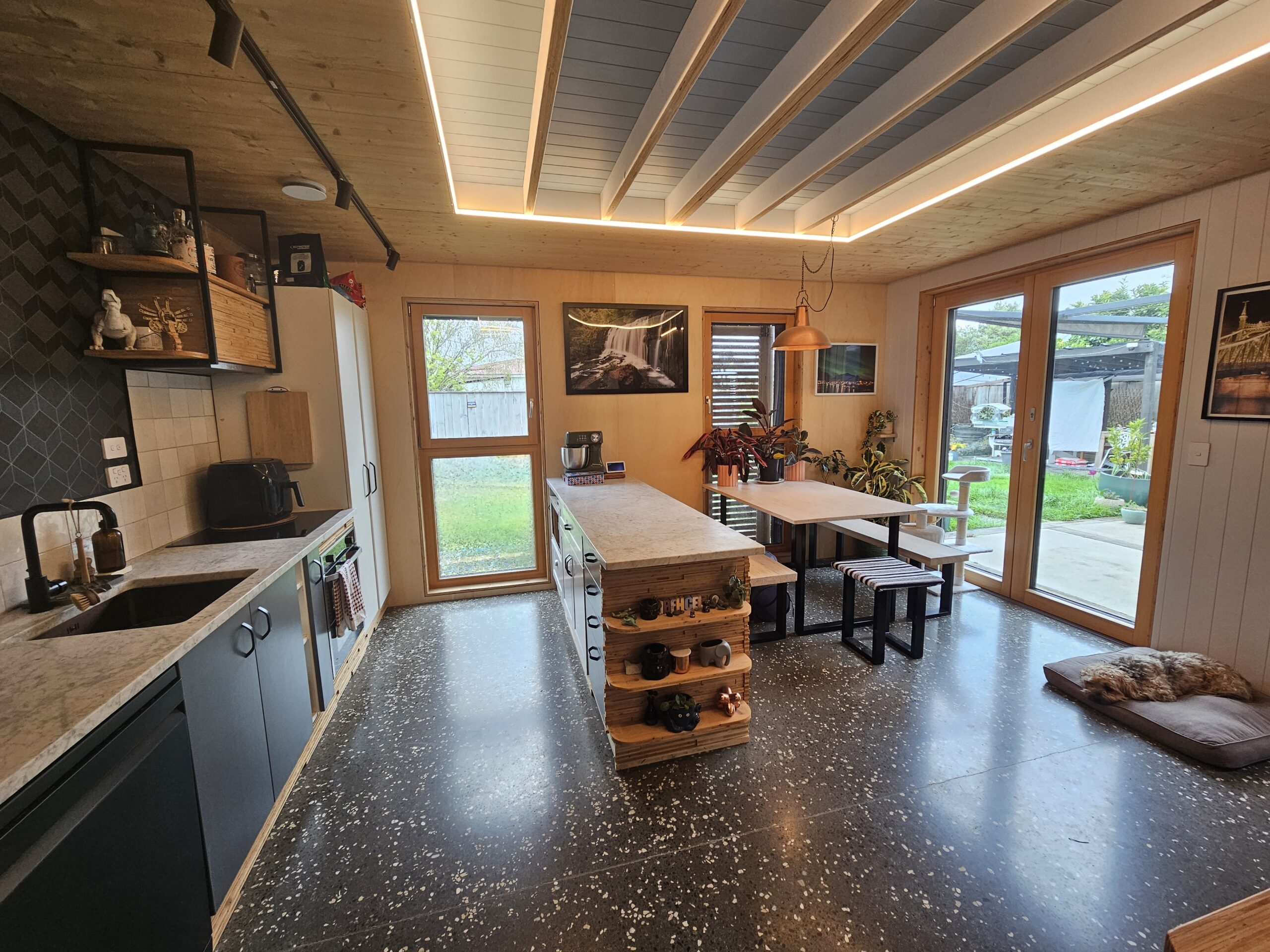
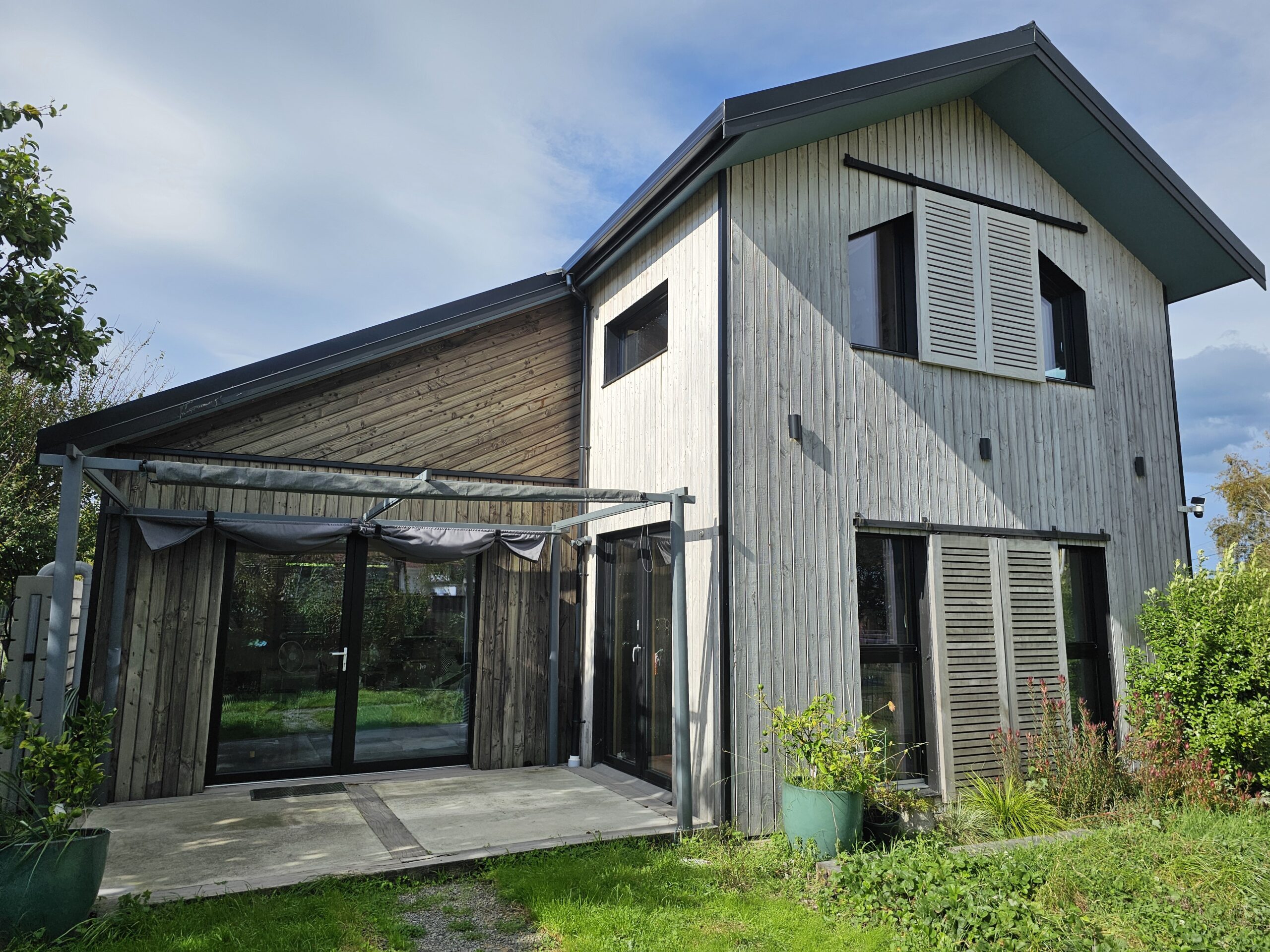
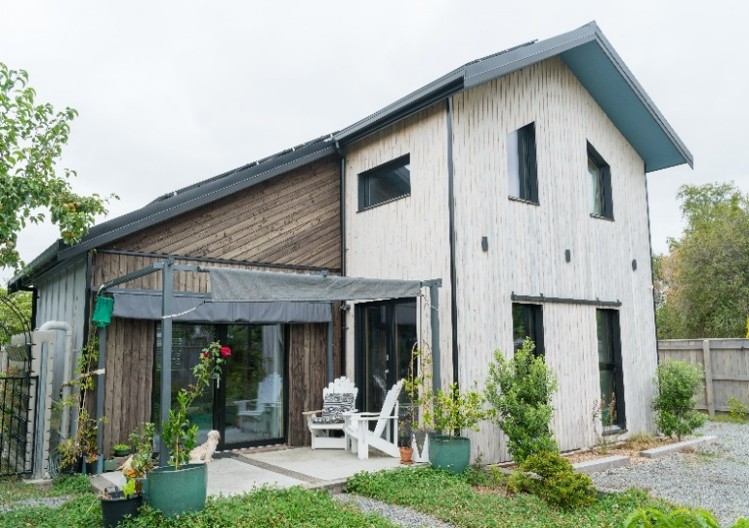
Hadaway House in the Wairarapa perfectly demonstrates the profound financial and health benefits of building to the Passive House standard. This home is a quiet, clean-air sanctuary in an area plagued by poor winter air quality. By investing in the building envelope, the owners have essentially eliminated their utility bills, turning their home into a resilient, healthy asset rather than an ongoing financial burden.
The reality of certification
Designing and certifying a Passive House requires a methodical approach. For the owner-designer, navigating the certification process for the first time was an immense challenge. However, the rigor of the standard brought an unexpected benefit to the wider Wairarapa region: it forced local trades to upskill. The rigorous design challenged local trades primarily due to the introduction of new technologies and a general lack of experience with homes built beyond code minimum—which essentially defines the worst house legally allowed to be built.
When construction began, installing a heat pump hot water cylinder was a completely foreign concept to local plumbers. Fast forward a few years, and those same plumbers are now widely recommending the technology. The project served as a catalyst for local inspectors and builders to familiarize themselves with high-performance construction methods, establishing a better baseline for future homes in the area.
A sanctuary from poor air quality
The reality is that building to a low standard just loads a lot of stuff onto people’s lives—from managing mold to breathing in neighborhood pollution. Masterton frequently struggles with poor air quality during the winter due to heavy wood smoke and external pollution.
To combat this, Hadaway House relies on a Zehnder Mechanical Ventilation with Heat Recovery (MVHR) system fitted with carbon filters. The result is a profoundly healthy indoor environment. The owner’s husband, who historically suffered from severe hay fever, sees his symptoms vanish when inside. When visiting relatives stay over, standard winter coughs rapidly disappear. The home is continuously supplied with fresh, filtered air, completely isolated from the toxic wood smoke outside.
Thermal stability and extreme resilience
The home’s thermal performance effectively decouples it from the Wairarapa’s temperature extremes. During autumn and spring, the house requires zero active heating or cooling.
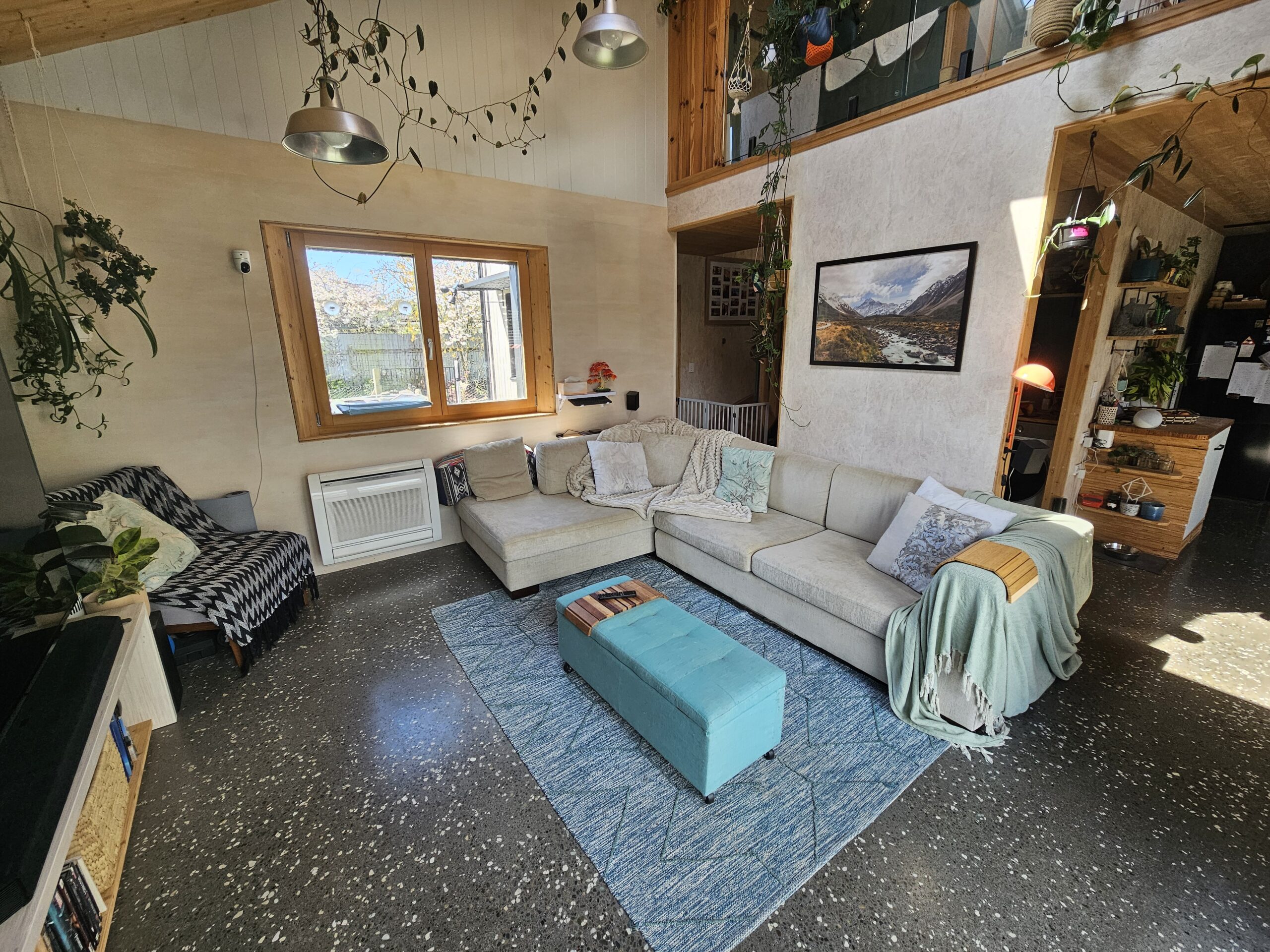
In winter, the home easily maintains a comfortable 22°C. Even when outside temperatures drop to -3°C overnight, the internal temperature only dips by a degree or two. The owners manage their winter heating by running their heat pump for just one hour in the evening—strategically timed to coincide with their electricity provider’s “free hour of power.”
In summer, external shutters remain closed to keep the house shaded and cool. When the external temperatures push toward 30°C, the home’s photovoltaic (PV) array powers the air conditioning for free, keeping the interior at a constant 20°C.
The building’s high-performance envelope also provides exceptional resilience against infrastructure failures. During one incident, a tripped switch cut power to the heat pump hot water cylinder. Because the cylinder and the home are so well insulated, it took a full 36 hours for the owners to even notice a drop in hot water temperature.
The financial payoff
The upfront investment in thick insulation, airtightness, and high-performance Triple glazing pays ongoing dividends. Because the home requires so little energy to run, the rooftop PV panels generate a surplus. The owners do not pay for power; instead, they run a credit that covers their monthly internet bill. Over the summer months, both power and internet are effectively free.
Hadaway House proves that stepping off the minimum-code treadmill results in a home that takes care of its occupants, rather than the other way around.
Passive House Metrics
- Heating Demand15.2kWh/m2/year
- Heating Load12.9 W/m2
- TFA112.3m2
- Form Factor3.6
- Air leakage @ 50Pa0.4 ACH/hour
- PER demand55.4kWh/m2/year
Passive House Database – TBA
Construction Details Average Values
- U-value External Walls0.1 W/(m2K)(R6.0)
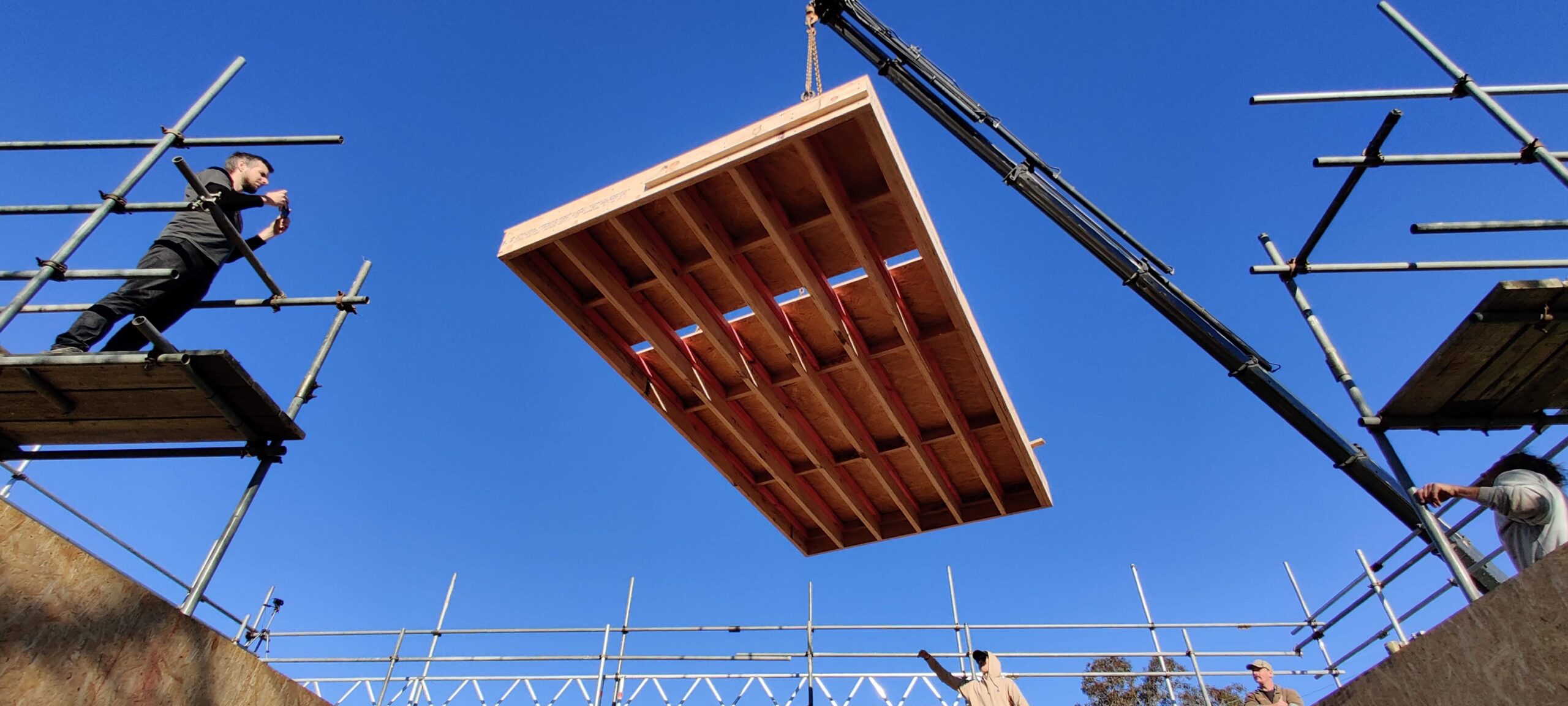
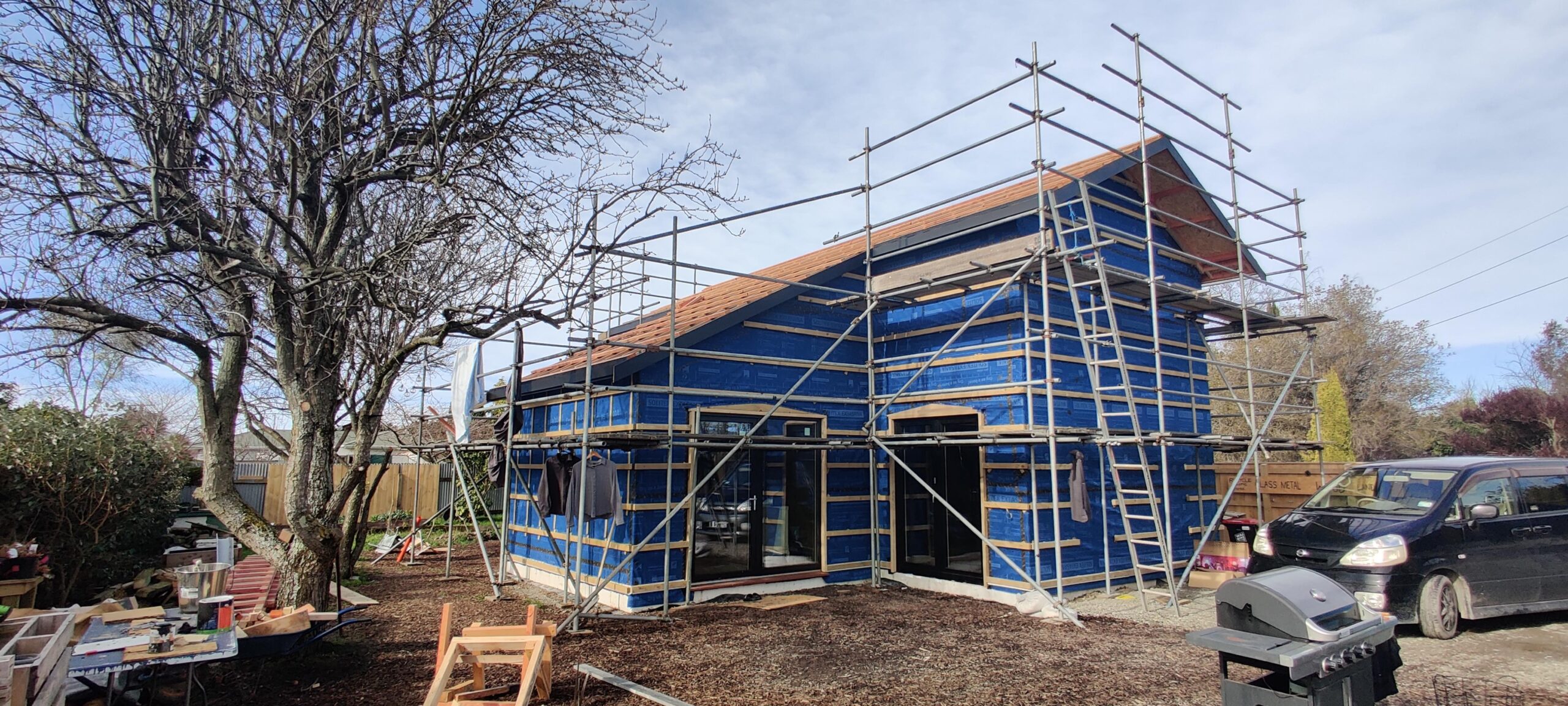
- 140mm timber frame, with 70-90mm services cavity and 24mm wood fibre board externally
- U-value Floor0.2W/(m2K)(R3.6)
- Concrete MAXSlab with 130mm expanded polystyrene
- U-value Roof 0.1W/(m2K)(R8.6)
- 290mm rafters with 100mm services cavity and 24mm wood fibre board
- U-value Glass0.6 W/(m2K)(R1.6)
- Triple glazing with argon and lowE, 20mm spacer
- U-Windows1.0 W/(m2K)(R1.0)
- Sirius D windows, Thermadura DesignLine doors and Fakro Skylights
- Ventilation Efficiency87%
- Zehnder – ComfoAir350, ComfoD350, WHR930
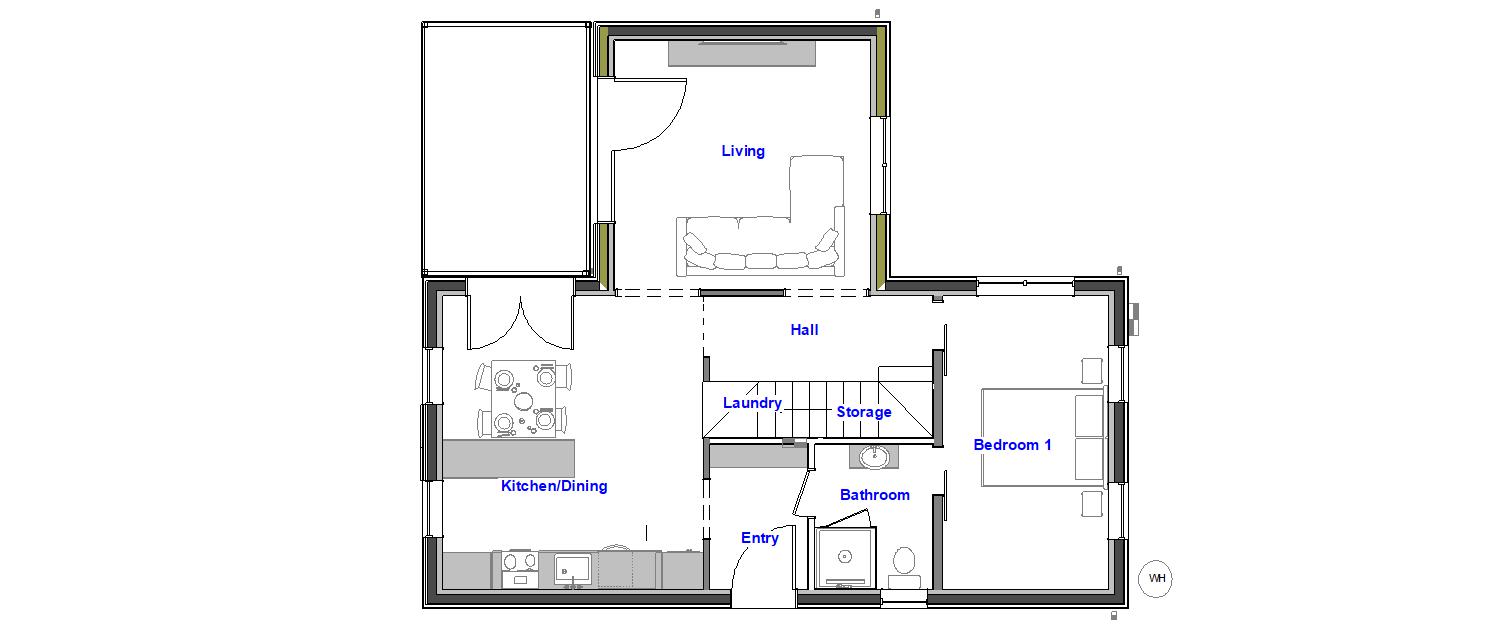
Ground Floor
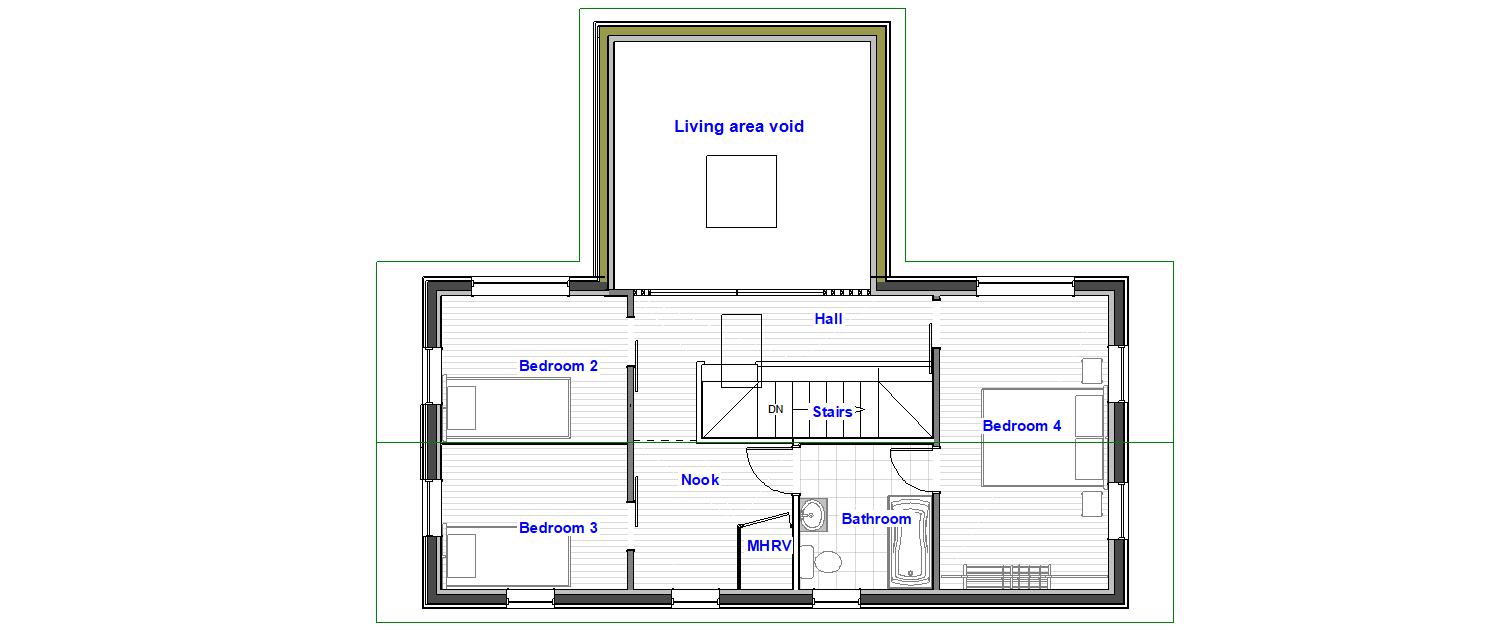
Second Floor