
Project Team
Architecture & Passive House Design Design & Make Architects(Elizabeth Guthrey) – designmake.co.nz
Builder – Ever Homes(Everett Norris) – everhomes.co.nz
Certifier Sustainable Engineering Ltd – sustainableengineering.co.nz
Norris strawbale Passive House
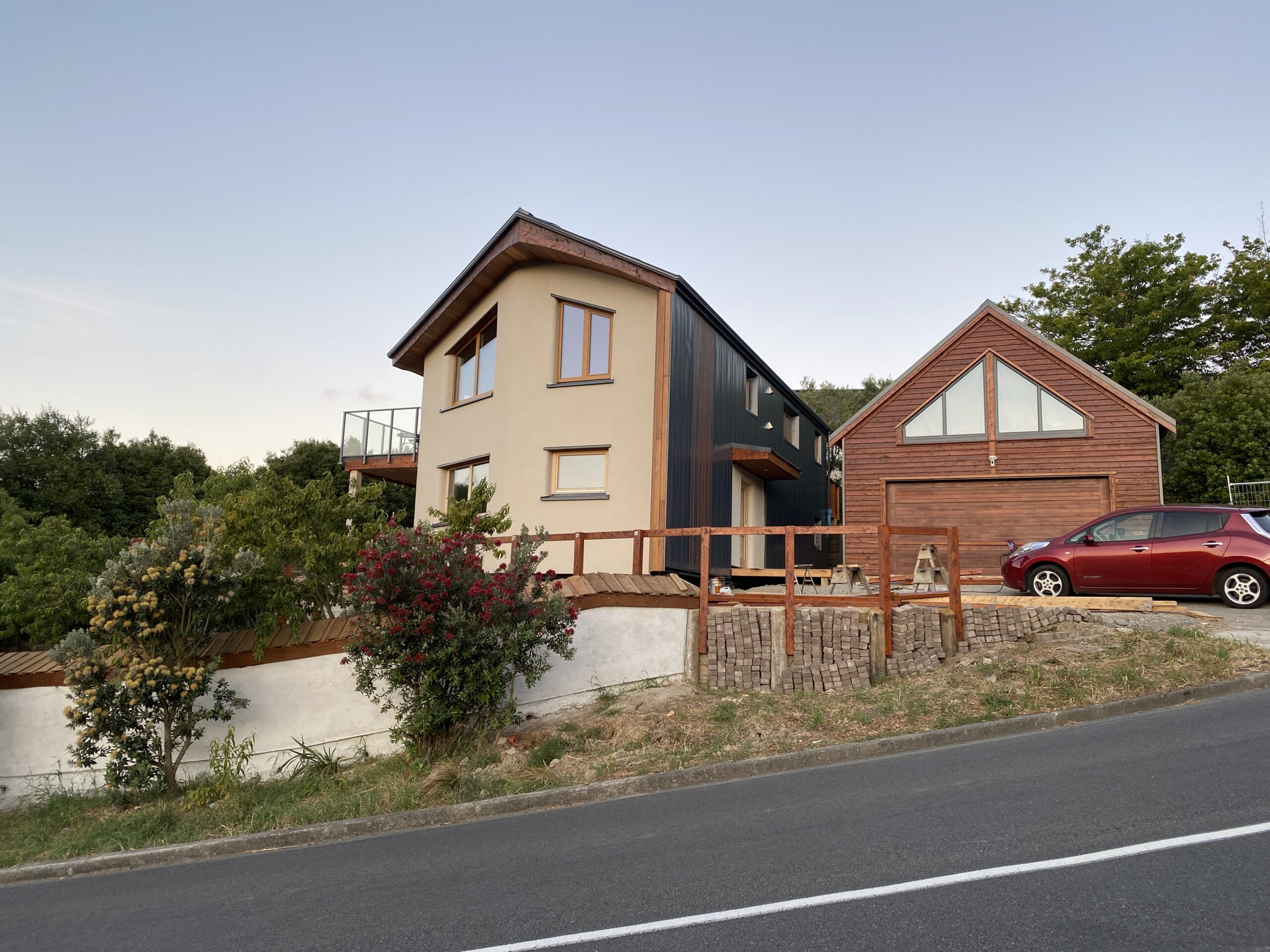
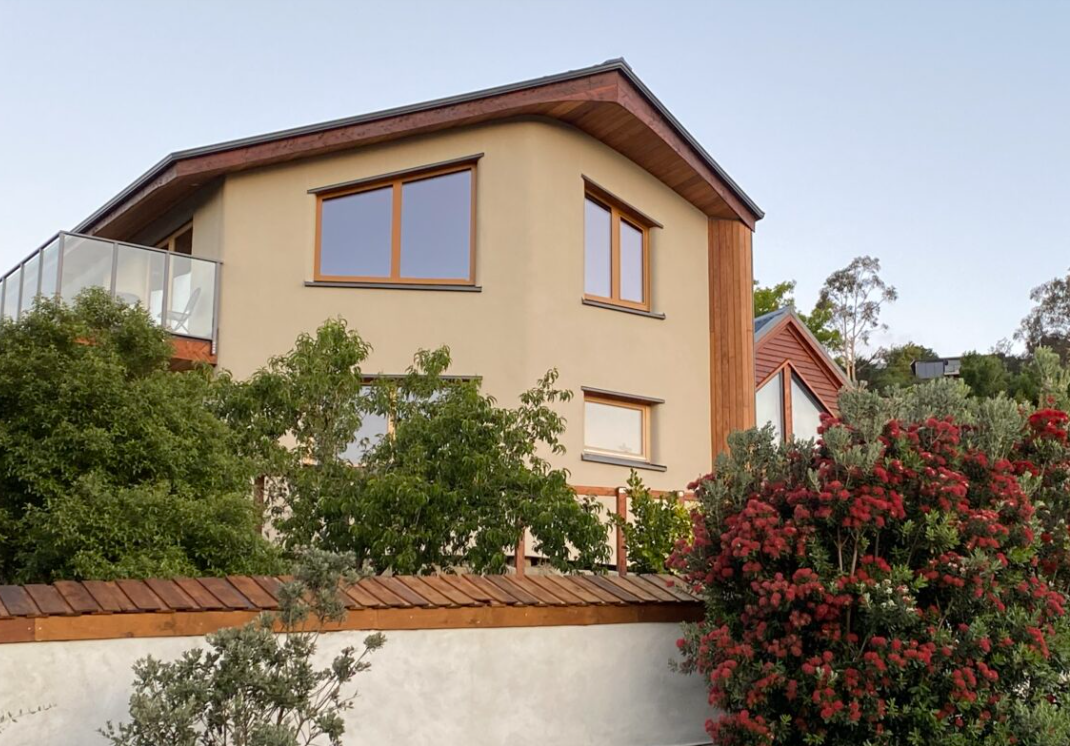
The Norris strawbale Passive House in Christchurch, designed by Elizabeth Guthrey and built by Everett Norris of Everhomes, proves that natural materials and organic aesthetics can meet rigorous building physics. Recently featured on Grand Designs New Zealand, the home serves as an educational model for high-performance natural building.
Site constraints become thermal advantages
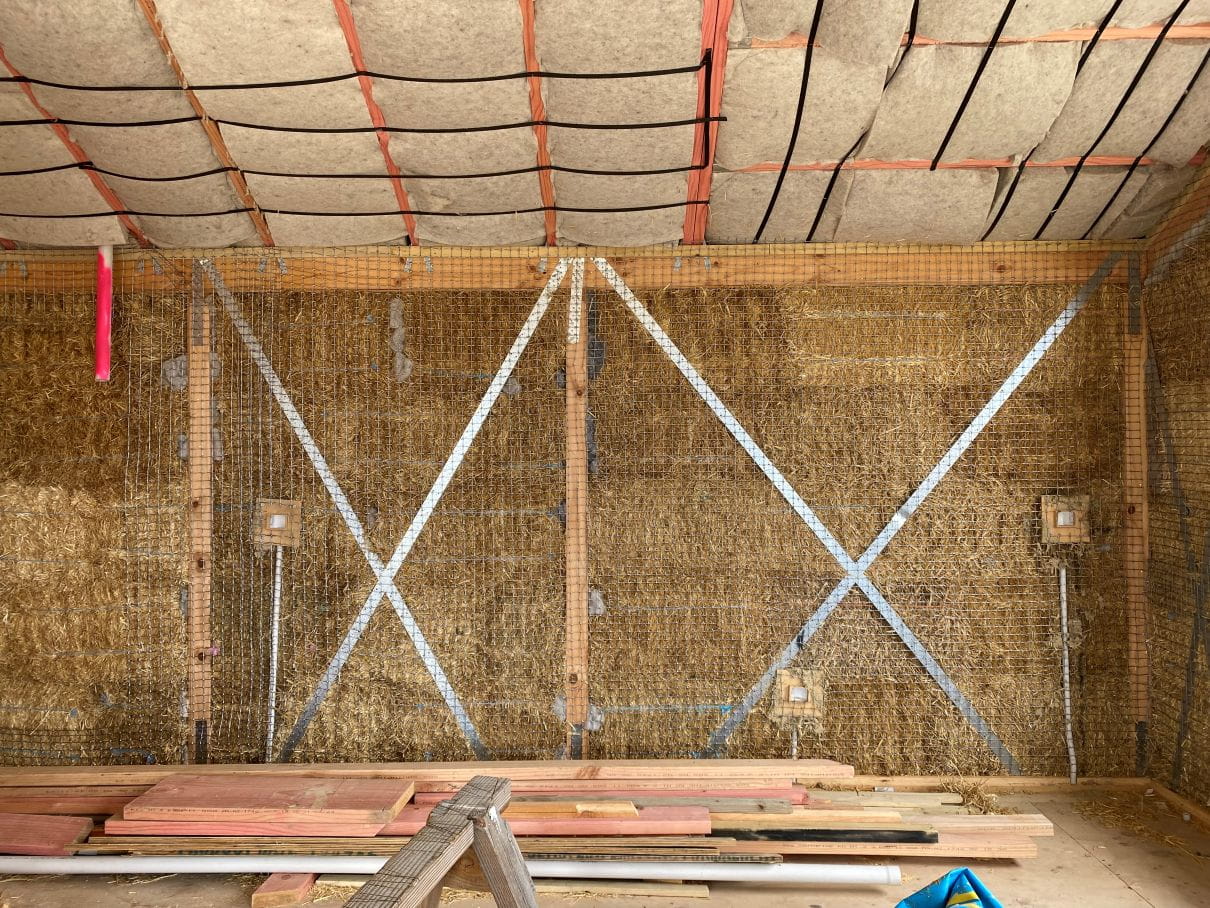
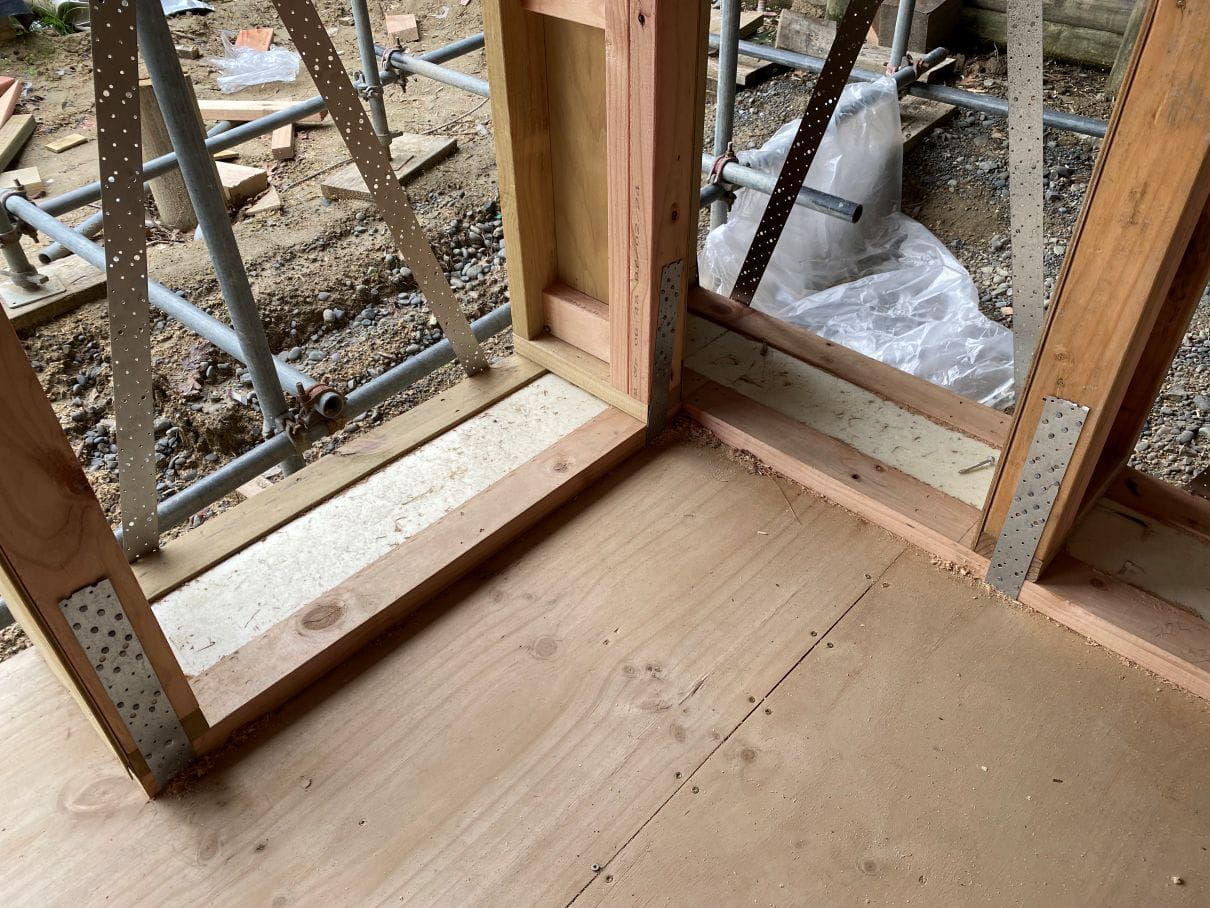
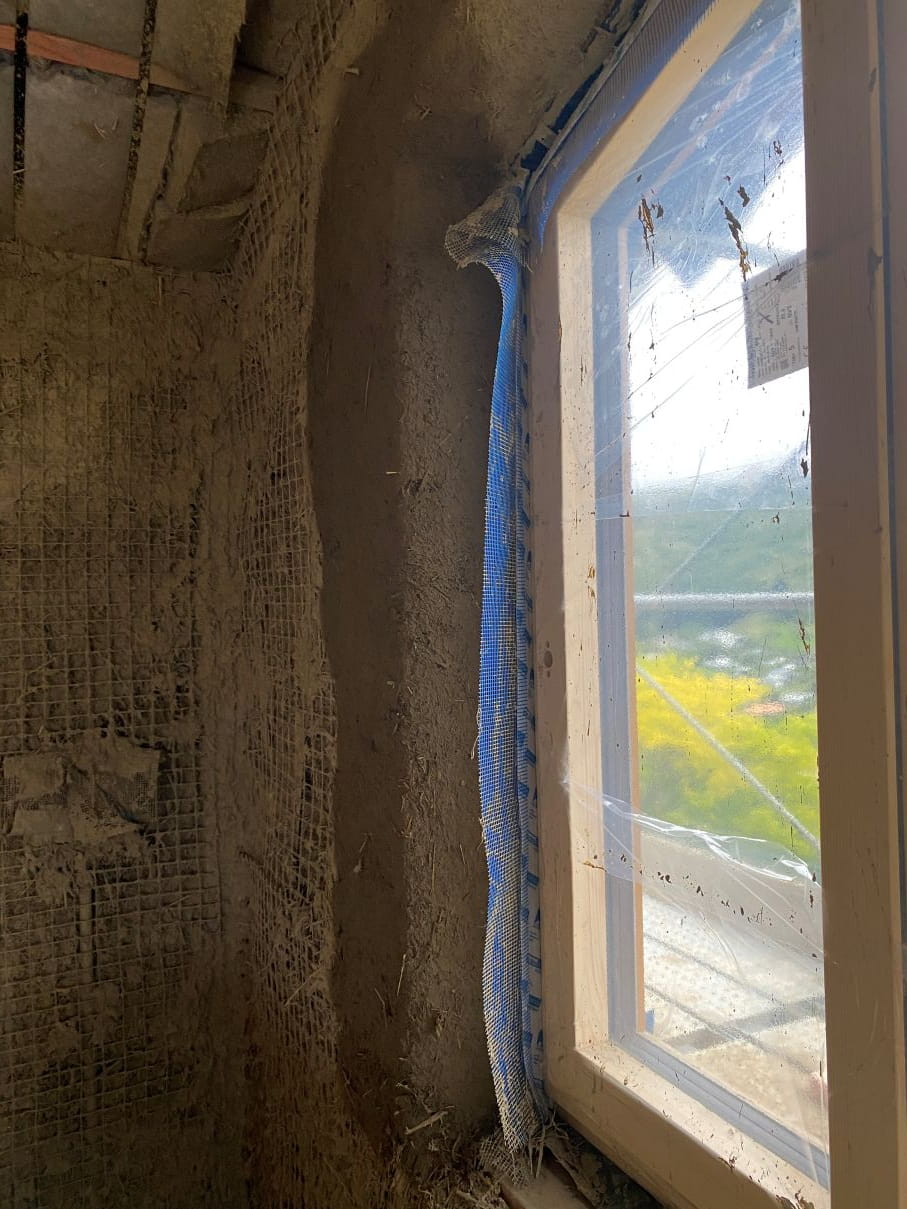
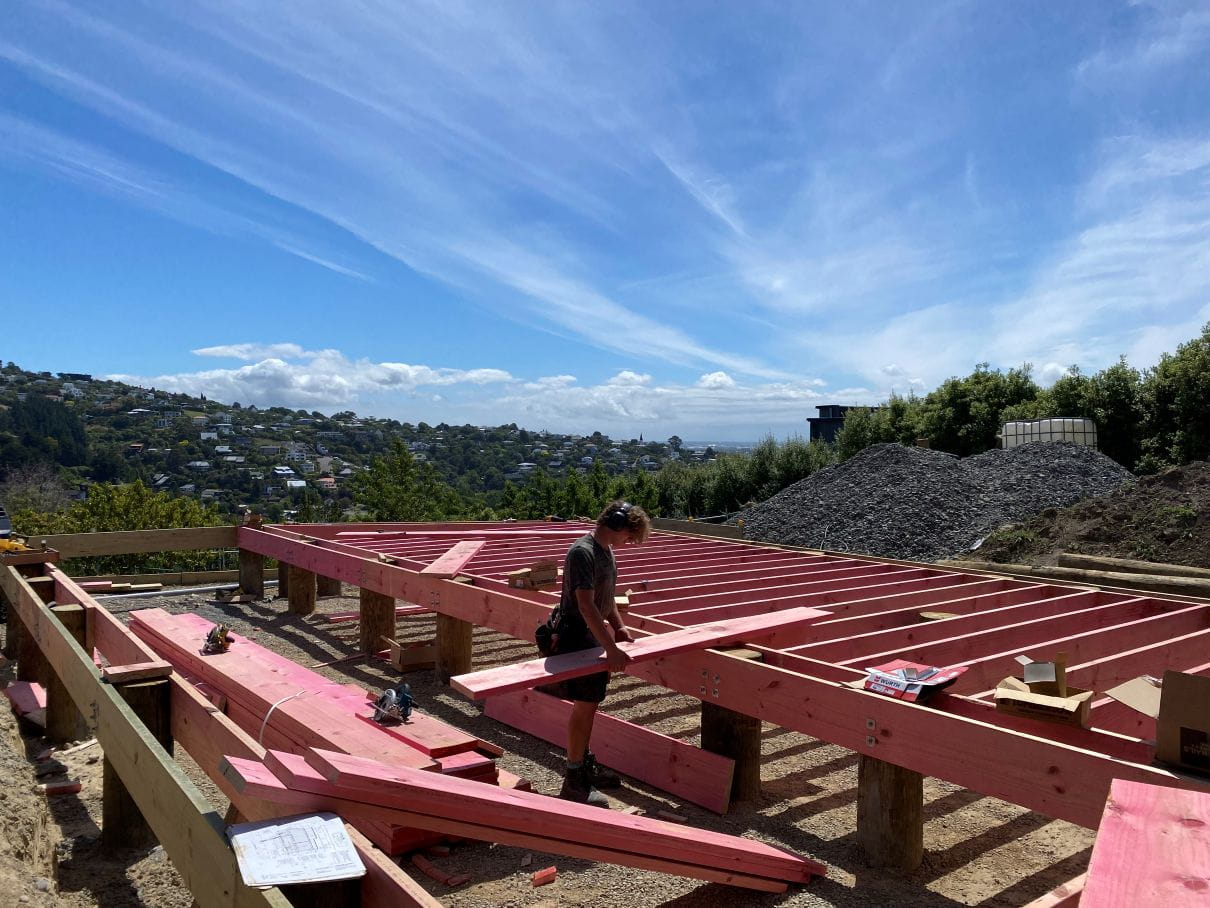
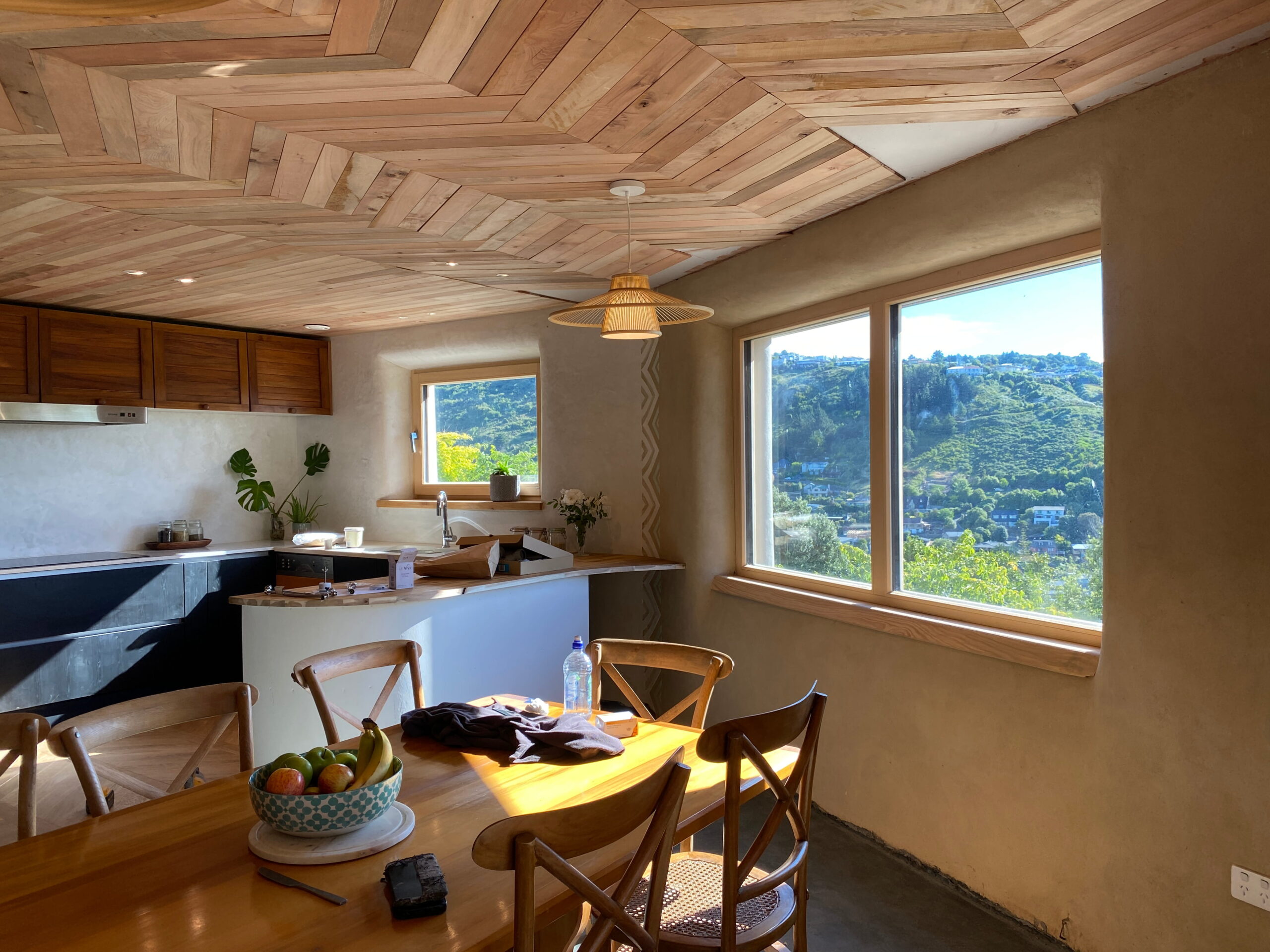
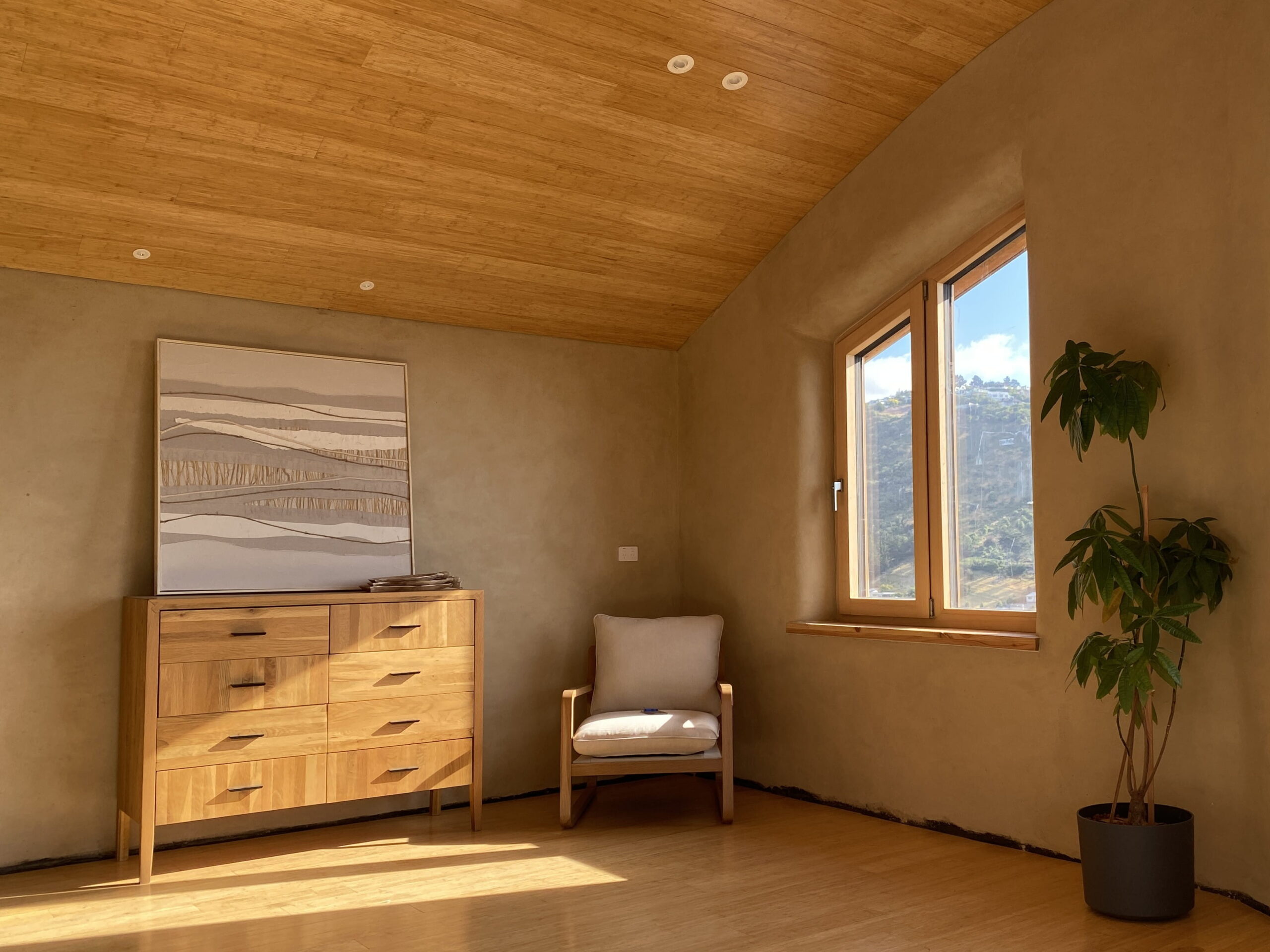
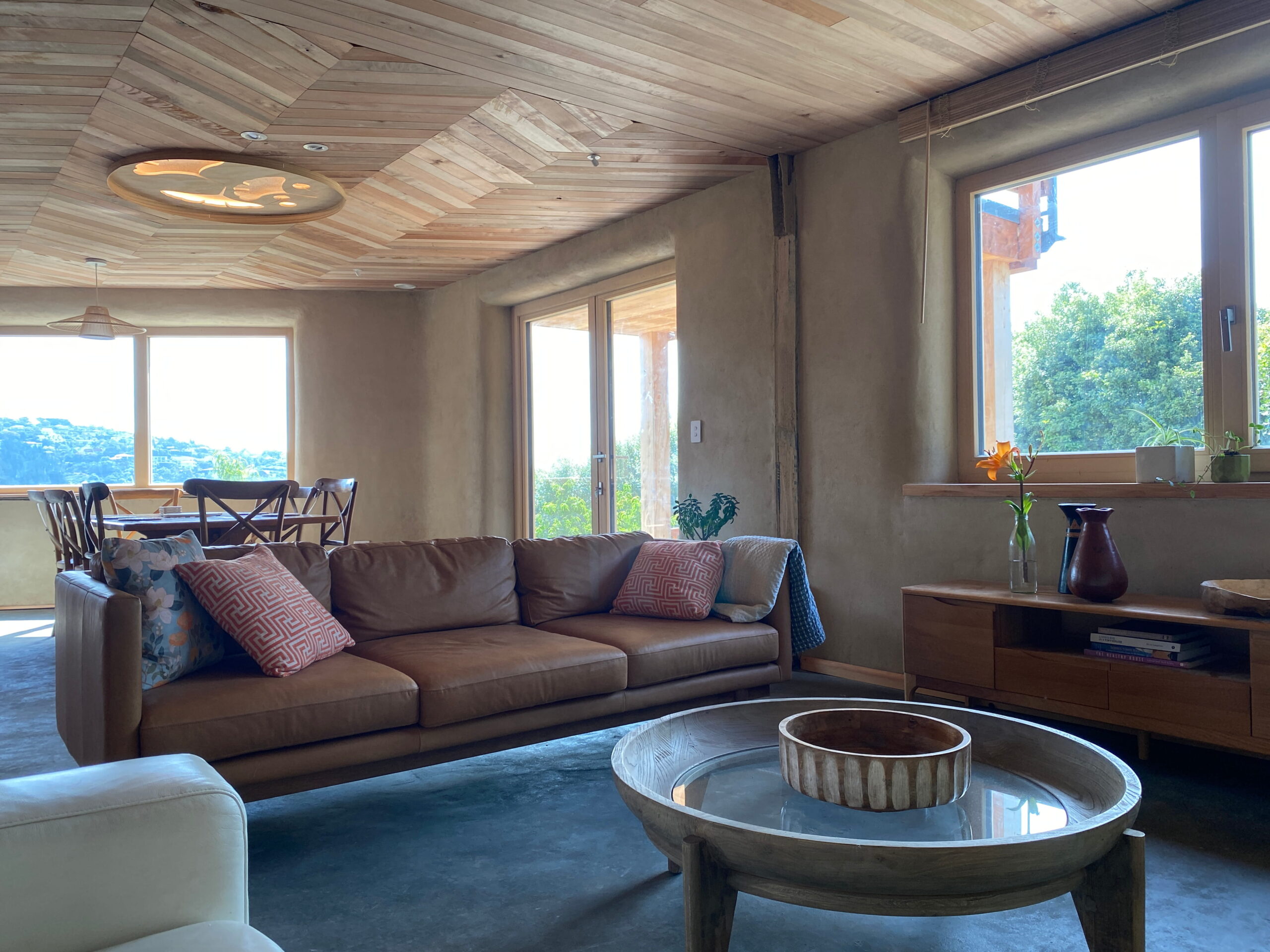
Building in a designated mass movement earthquake zone ruled out a standard concrete slab, requiring deep timber piles instead. The team turned this foundation constraint into a thermal advantage. The raised timber floor accommodated 290mm of wool insulation, achieving significantly higher thermal resistance than a traditional slab. For airtightness, plywood serves as the floor membrane, while thick internal and external clay plasters seal the strawbale walls directly. The interior features handcrafted details, including an earth floor sealed with a mixture of linseed and lightly pigmented tung oil (yes over the plywood suspended floor), alongside a smooth Moroccan-style Tadelakt lime plaster in the bathrooms, kitchen and stairwell.
Living the Passive House reality
The home performs exceptionally well, maintaining stable, comfortable temperatures and a distinctly natural indoor air quality. The resulting indoor environment is self-regulating, requiring a habit adjustment for the home’s new flatmates. Accustomed to standard housing, they initially opened windows every morning to prevent condensation. They quickly learned the mechanical ventilation with heat recovery (MVHR) unit autonomously extracts moisture and supplies fresh air, allowing occupants to use a lightweight summer duvet through winter.
A public model for forever homes
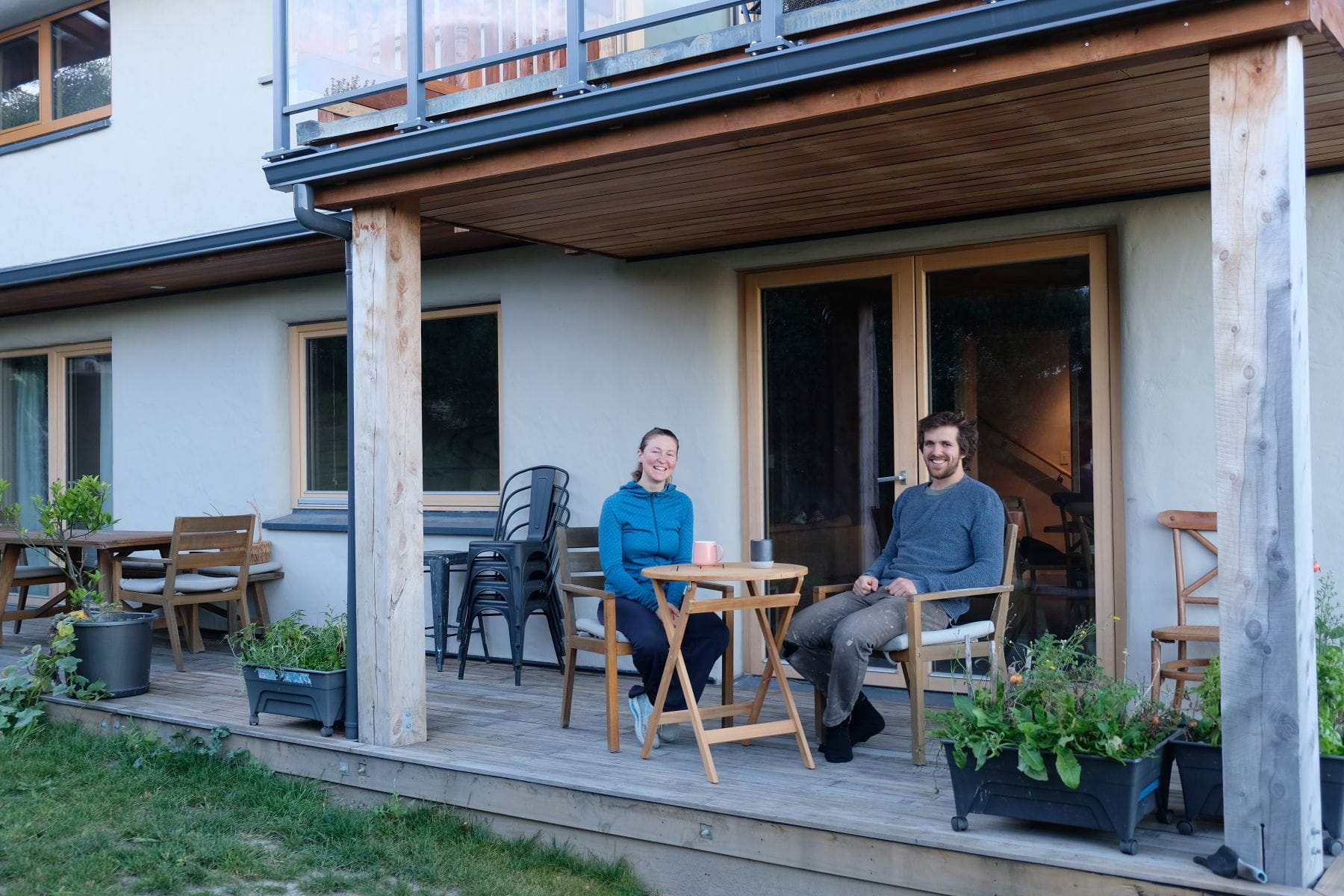
The design/build couple chose to be on Grand Designs New Zealand to challenge current construction industry standards. Their goal is to normalize “forever homes” buildings engineered for longevity and health, a philosophy that directly inspired the name of Everett’s construction company, Ever Homes. While the initial days of filming were nerve-wracking, the couple pushed through the discomfort to reach a national audience. They are driven by a deep desire to use their craft to do good in the world, demonstrating that natural, high-performance housing is a viable reality.
Finance and lessons learned
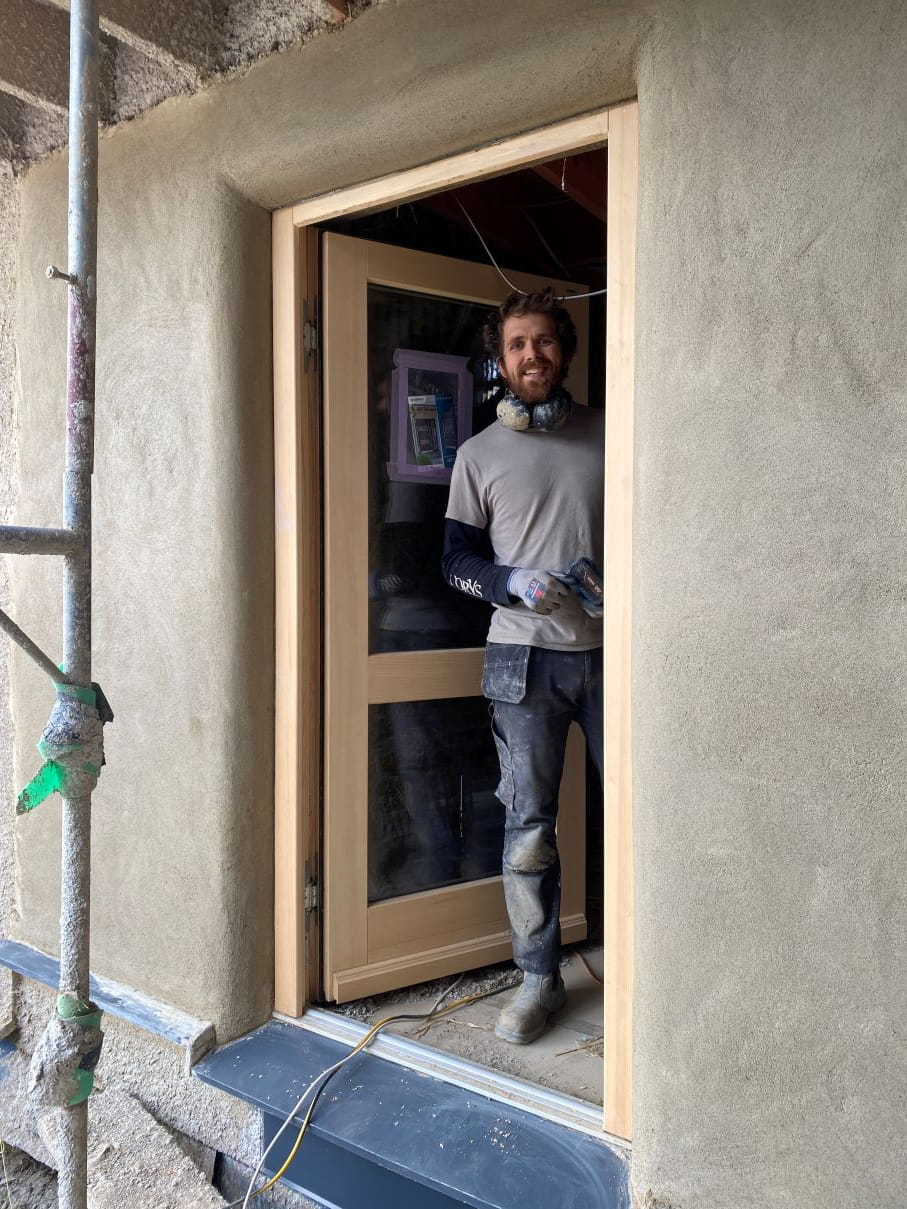
To manage the budget, the owners prioritized the thermal envelope and high-performance timber windows. Upfront costs were offset by specifying a cost-effective option where possible with examples of this being the Brink MVHR unit and sourcing secondhand, colour-matched timber for internal finishes. Based on their experience, Elizabeth and Everett advise aspiring owners to build a smaller project first. For example, constructing a tiny house together previously tested their budget management and partnership dynamics before committing to a major Passive House build.
Passive House Metrics
- Heating Demand14.3 kWh/m2/year
- Heating Load10.0 W/m2
- TFA156 m2
- Form Factor2.9
- Air leakage @ 50Pa0.6 ACH/hour
- PER demand29.4 kWh/m2/year
Passive House Database – 8114
Construction Details Average Values
- U-value External Walls0.15 W/(m2K)(R6.77)
- Strawbale with internal and external clay plasters
- U-value Floor0.19 W/(m2K)(R5.36)
- Earth floor on substrate on 290mm floor joists with Terra Lana insulation
- U-value Roof 0.15 W/(m2K)(R6.87)
- 290mm rafters with Terra Lana insulation. 35mm services cavity with Terra Lana insulation
- U-value Glass0.56 W/(m2K)(R1.79)
- Bayerwald 4/18/4/18/4
- U-Windows1.1 W/(m2K)(R0.9)
- Bayerwald H90
- Ventilation Efficiency88%
- Brink Climate Systems B.V. – Brink Flair 325
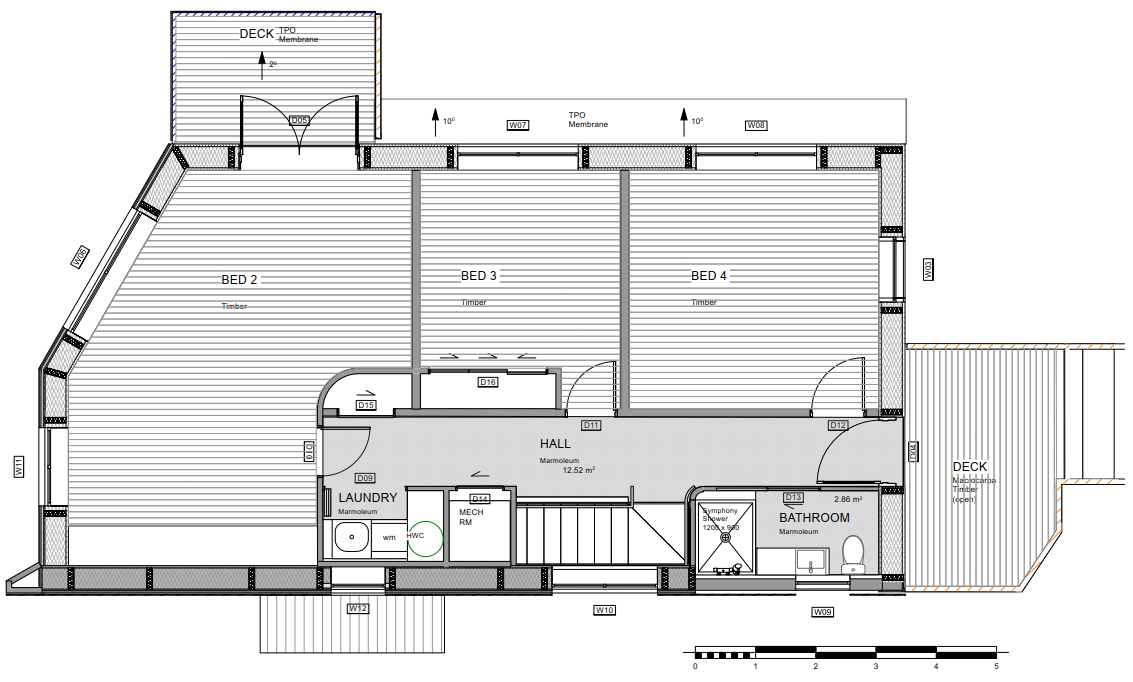
Ground Floor
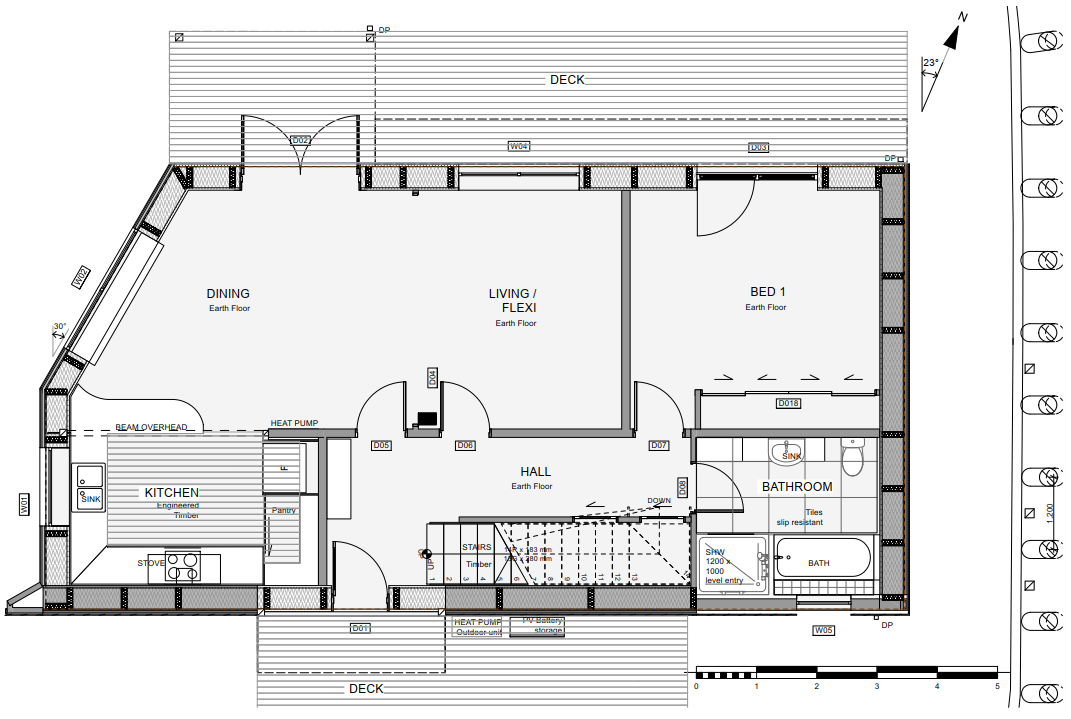
first floor