
Project Team
Architecture & Passive House Design VIA Architecture – via-architecture.net
Builder Mike Craig Builders Ltd – mikecraigbuilders.co.nz
Certifier Sustainable Engineering Ltd – sustainableengineering.co.nz
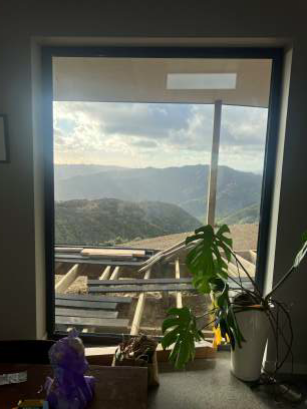
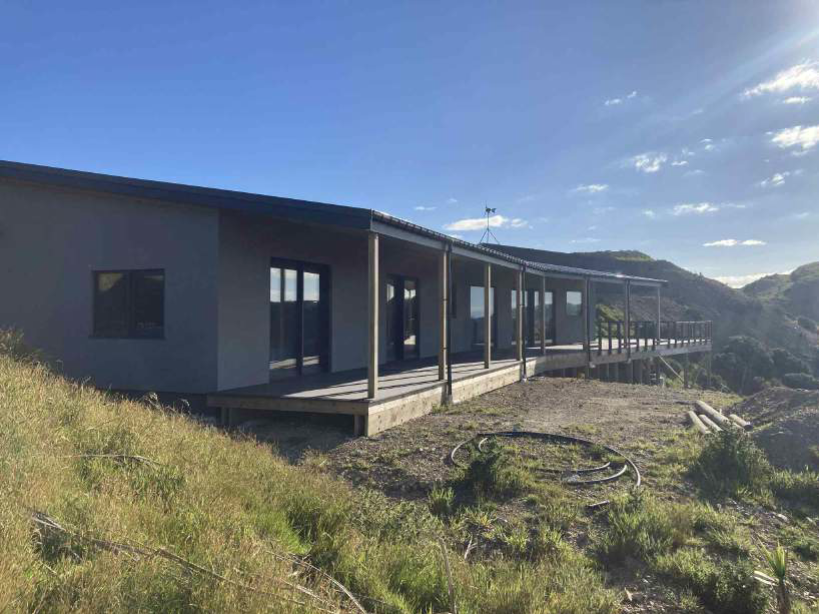
Building a fully off-grid home at an altitude of 402 meters in the rugged Brooklyn hills of Wellington requires a design that prioritizes resilience above all else. For this Passive House Plus project, the thermal inertia and airtightness of the Passive House standard serve as the ultimate insurance policy. By eliminating the need for a fossil-fuel backup generator, the design proves that even in extreme wind zones and high-exposure rural sites, a consistent internal environment can be maintained through smart design and renewable generation.
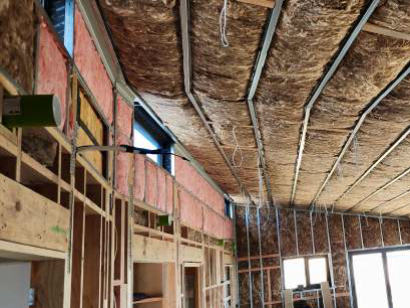
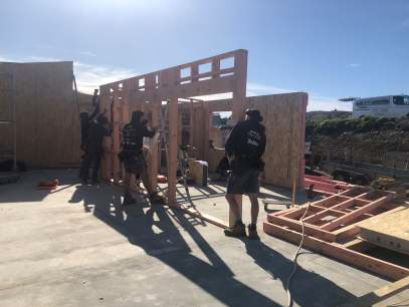
The decision to go off-grid was a practical necessity, as the site lacked access to network utilities. For the owners, the “tipping point” was the realization that a standard code-compliant home would require significantly more energy to stay comfortable, putting an unsustainable strain on a battery-and-inverter system. The design utilized Formance structural insulated panels (SIPs) for the walls and roof, providing a high-performance thermal envelope that could be erected quickly on a remote site.
For Bahareh Amiri, the designer and energy modeller, the success of the project was rooted in a collaborative ecosystem. She credits the mentorship of Elrond Burrell, director at VIA architecture, and the early input, and later the craftsmanship, of builder Mike Craig as essential to navigating her first Passive House project. “The relationship between the energy balance and the technical detailing is where the real resilience of the project is born,” Bahareh says. “For me, focusing on those junctions and the energy modelling became a lot more important.” She views the relationship between designer and builder not as a hand-over, but as a shared technical pursuit.
This teamwork was rewarded by an exceptional airtightness result of 0.2 ACH significantly better than the Passive House limit of 0.6 ACH. Achieving this on such a wind-swept site required the specification of Aliplast Genesis thermally broken aluminium windows, selected for their ability to meet stringent specific engineering design (SED) requirements without compromising the thermal envelope.
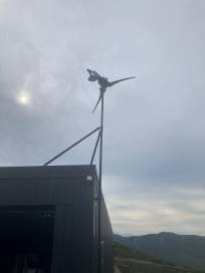
The project achieves Passive House Plus status through a rare combination of 20 solar panels and a marine-grade wind turbine. While solar is the primary energy source, the turbine provides critical generation during Wellington’s frequent cloudy, high-wind periods. During the iterative energy modelling in PHPP, the results indicated that the building met the certification criteria most easily via the heat load pathway rather than heating demand. This outcome reflects how the building’s form and the local climate interact.
Reflecting on the process, Bahareh notes that she would place even greater emphasis on compact building forms in the future. A more efficient form factor creates cascading benefits, simplifying the engineering of the envelope and making high-performance metrics even more accessible. For the clients, the final certification provides the verification that their home is designed and built to perform, ensuring life off the grid remains comfortable, healthy, and entirely self-sufficient.
Passive House Metrics
- Heating Demand17.2 kWh/m2/year
- Heating Load9.5 W/m2
- TFA221 m2
- Form Factor3.7
- Air leakage @ 50Pa0.2 ACH/hour
- PER demand28 kWh/m2/year
Passive House Database – 8224
Construction Details Average Values
- U-value External Walls0.17 W/(m2K)(R5.81)
- 165mm SIPs panel and services cavity
- U-value Floor0.09 W/(m2K)(R11.50)
- Concrete slab with 350mm expanded polystyrene
- U-value Roof 0.10 W/(m2K)(R9.69)
- 265mm/ 315mm SIPs panel with services cavity
- U-value Glass0.57 W/(m2K)(R1.75)
- Triple glazing with low E and argon, 18mm thermal spacer
- U-Windows1.0 W/(m2K)(R1.0)
- Aliplast Genesis GN75
- Ventilation Efficiency88%
- 01ud-Wolf GmbH – CWL-2-325