
Building a Certified Passive House in the challenging climate of Wanaka usually requires imported components. However, for this project the homeowners wanted the radiant heat and aesthetic of a wood burner without the high cost of a European model. The team chose to pioneer the use of a New Zealand-made Ethos wood burner, despite it having no prior test reports for airtightness or suitability in a Certified Passive House. While the wood fire’s 18kW output is vastly oversized for low-energy or Passive House builds, it provided the specific aesthetic and heating experience the clients sought.
Another key part of the motivation for the client was resilience, according to Passive House Designer Sarah Allen. “Should we find ourselves without electricity for a period of time in winter, for example due to an extreme weather event, she wanted be able to heat her home and also cook on the firebox,” Allen explains.
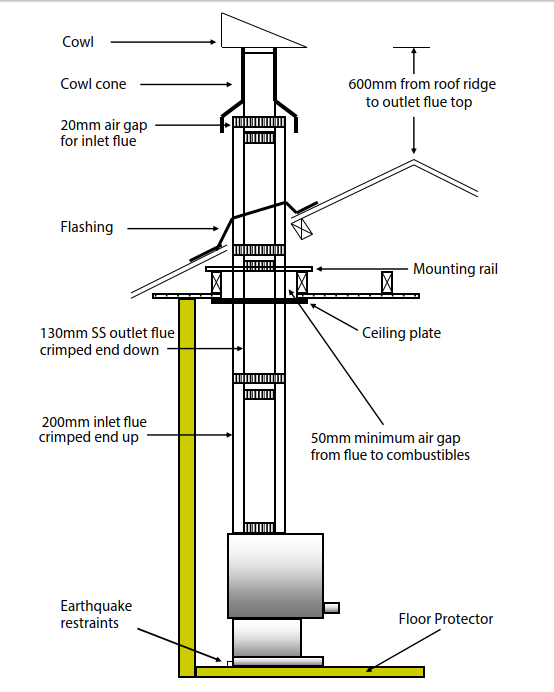
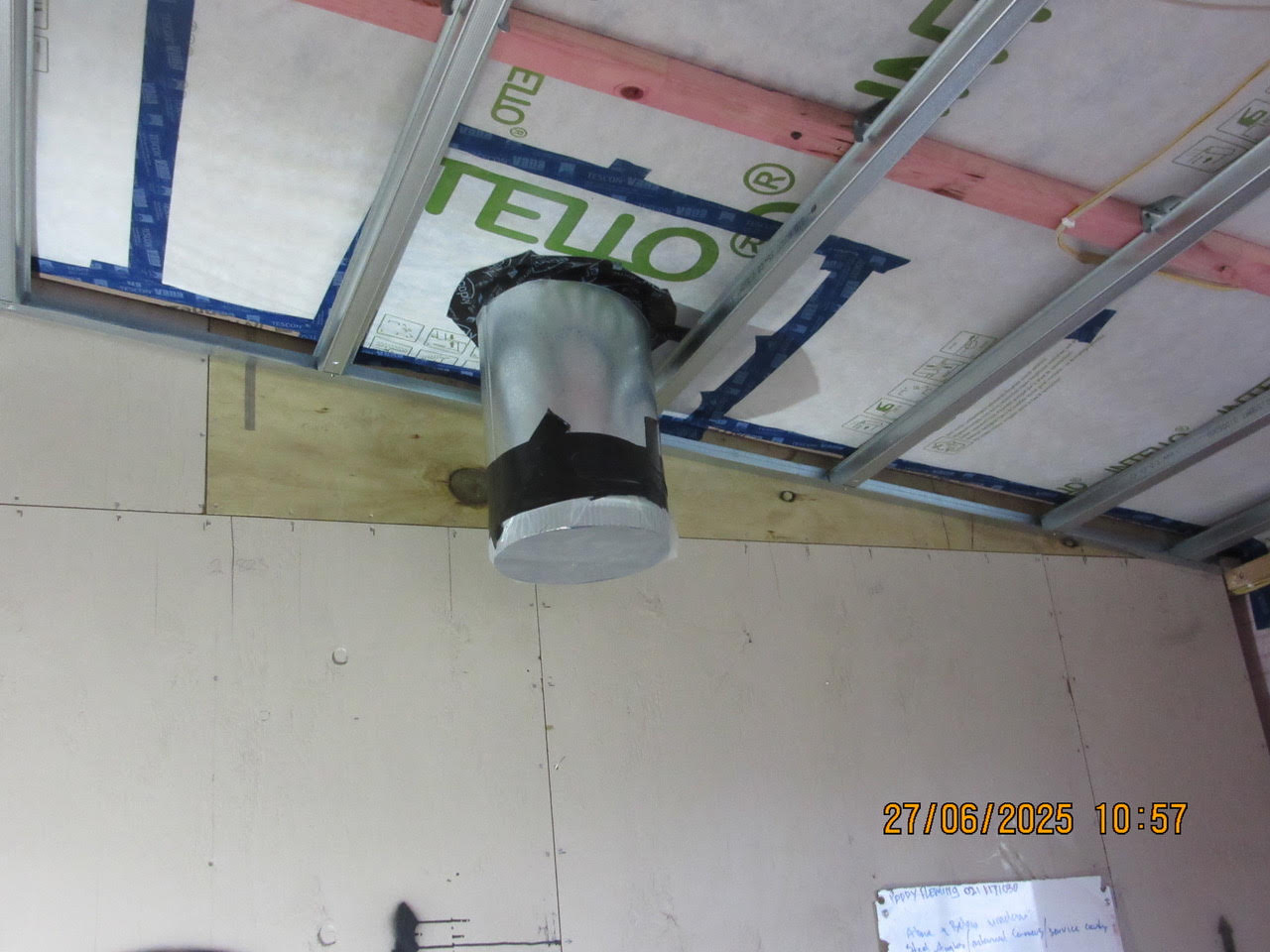
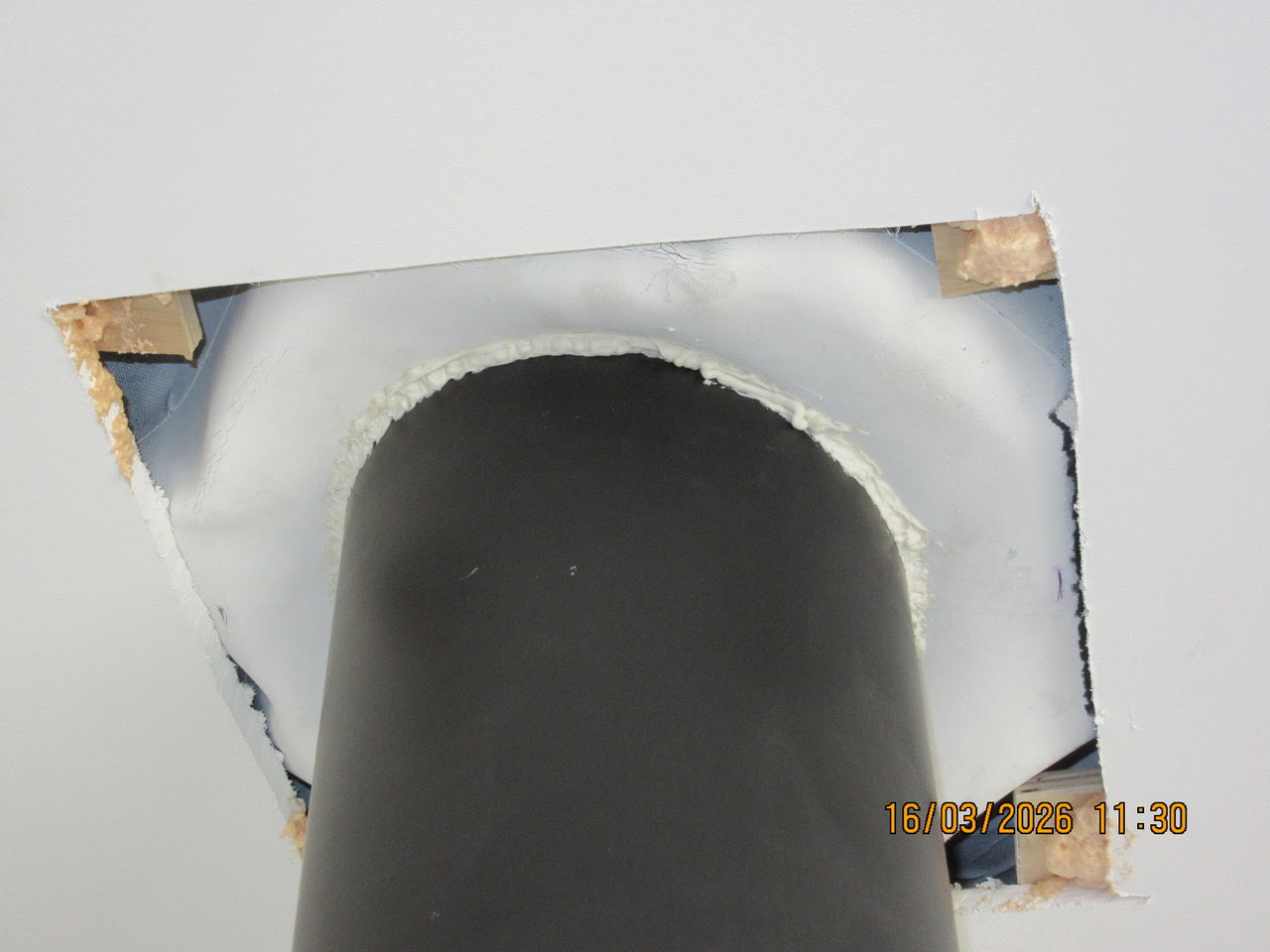
Key to the success of this choice was leveraging the Ethos multi-skin flue system, where combustion air enters the firebox from outside through the outer skin of the flue (see fig 1). This design keeps the outside face of the flue cool enough to safely attach the air and vapour control layer (AVCL) and underlay using standard butynol gaskets. To maintain the required 50mm separation from combustible materials, the builder, Nevan Jefferies, installed a 300mm sleeve tube to house the flue(see fig 2 and 3). He was able to install this, with the end covered for a sheet of butynol, at framing stage, and the hole in the butynol was only cut to size immediately before the fire was installed, even after the gib was stopped and painted. This innovative approach is one that Jefferies will repeat, even in standard builds, because of the guaranteed separation to the framing and insulation provided by the sleeve tube.
Passive House Institute considers it is not safe to simultaneously operate either a woodburner and the MVHR system in a well-sealed building without taking additional precautions. The mechanical ventilation with heat recovery (MVHR) system requires a safety shut-off to prevent combustion gases from being pulled into the living space from the firebox during a pressure drop (which can occur during a standard defrost cycle). Since pressure differential switches are unavailable in New Zealand, Sustainable Engineering recommended a carbon monoxide (CO) sensor connected to the ventilation system to trigger an automatic shutdown and alarm.
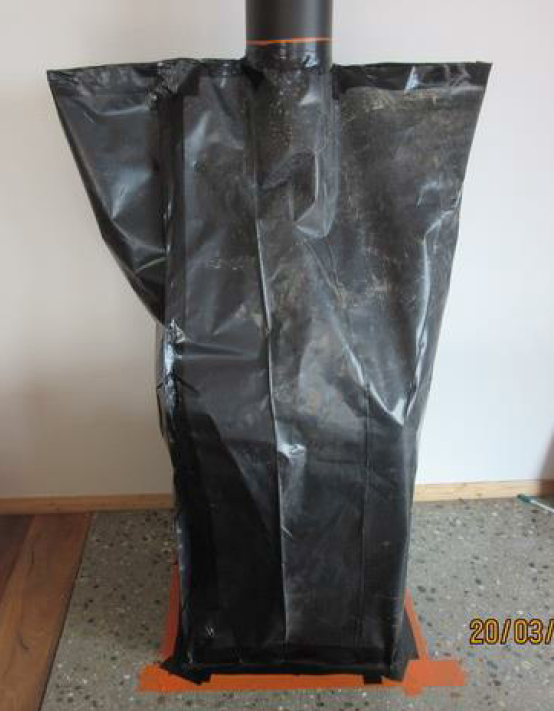
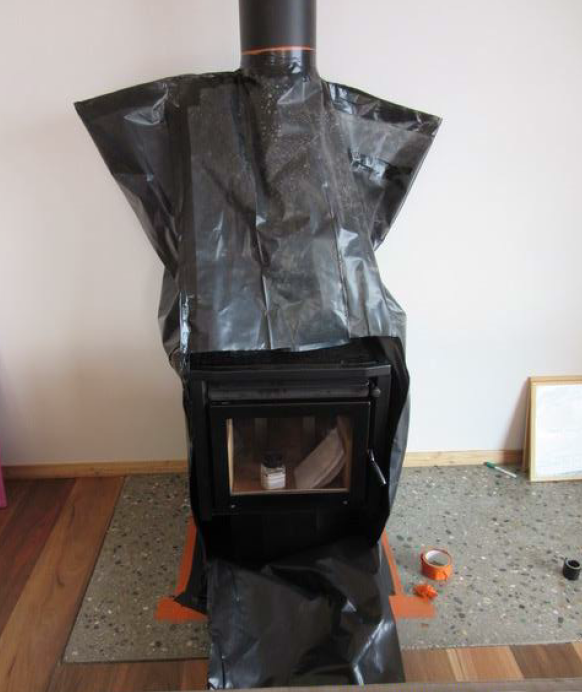
Verification of the wood stove airtightness was measured through a specific blower door testing protocol: wrapping the stove in plastic to establish a baseline at 50Pa, then cutting the plastic to isolate the unit’s leakage (see fig 4 and 5). This procedure recorded an additional air flow of just 0.01 air changes per hour (ACH) and, in our opinion, should be undertaken for any fire that lacks official airtightness testing.
This project proves that building physics and traditional comfort can coexist through early technical collaboration. By selecting a local fire at half the cost of imported versions, the team balanced the budget while meeting the homeowners’ desires. Jefferies points to “nerdy” preparation—checking the fire’s position relative to truss centres and service zones from the outset. This case study demonstrates that with rigorous testing and proactive safety measures, local wood burners can be a viable solution for Certified Passive House builds in cooler climates.
More details for Passive House Designers here: