
A recent BBC profile on architect Marion Baeli’s retrofitted 1960s home in London shows how high-performance design handles extreme heat without active cooling. During a 35°C heatwave, her home stayed 10°C cooler inside, prompting her to note, “It feels like you have air-conditioning but you haven’t. This is the beauty of the Passivhaus standard”. The trick isn’t just heavy insulation; it’s actively blocking solar radiation before it hits the glass during the day and purge-ventilating when temperatures drop at night.
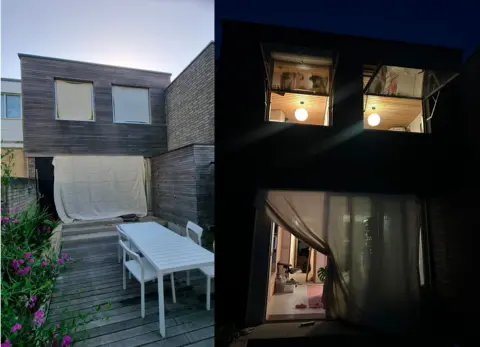
Image from BBC article. Literally adding fabric outside to keep sun off the glass!
Here is how New Zealanders can apply these building science principles this summer:
- For general NZ homes: Stop solar gain before it crosses the glazing. Interior curtains trap heat inside like a greenhouse; install exterior blinds, awnings, or temporary shade cloths over north- and west-facing windows. At night, open windows to flush warm air out.
- For NZ Passive House owners: Deploy external shading early in the morning before heat builds up. Set your MVHR to summer bypass to bring in cool night air without heat recovery, and use secure window openings for night purge ventilation. A highly insulated envelope acts like a thermos—if you let heat in during the day, it stays trapped inside.
This BBC article profiles a multi-stage Passive House retrofit of a 1960s London terrace house. By combining airtightness, insulation, triple glazing, external window shading, and night-time ventilation, indoor temperatures were maintained 10°C lower than outdoor heatwave conditions without installing air conditioning.
Reference Tanaka, M. (2026). How this 1960s ex-council house is managing to stay cool without air con. BBC News.