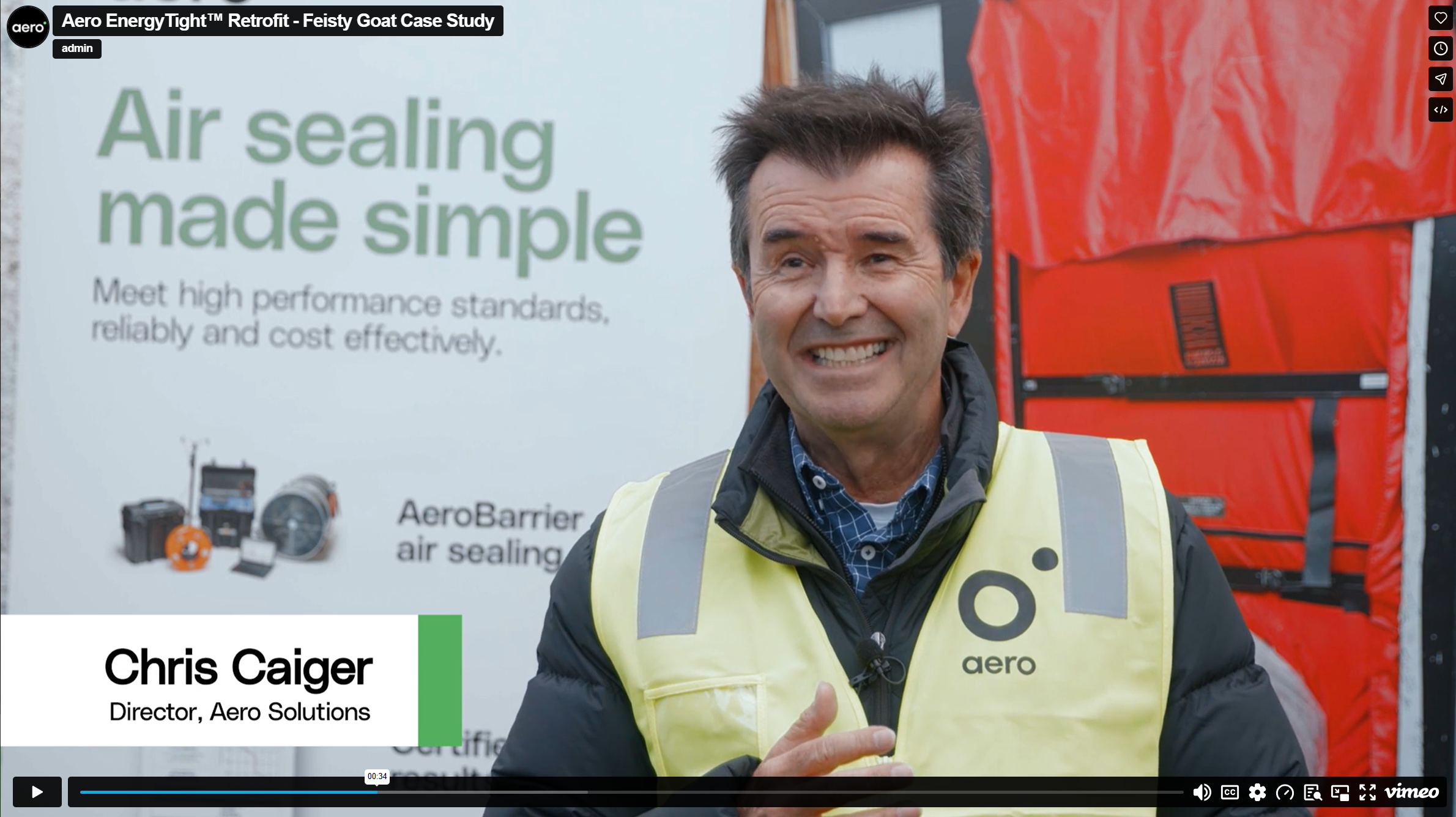
A recent TVNZ Breakfast piece highlighted a fantastic retrofit project by the AeroBarrier team on the “Feisty Goat”, a 145-year-old student flat in Dunedin. Despite technically meeting Healthy Homes standards, the flat was freezing and leaking heat so quickly that the heat pump made little impact. Tenants were left layering up in puffers and beanies indoors.
Initial blower door testing recorded an air leakage rate of 16 ACHn50, which translates to roughly 19 complete air changes per day under normal conditions. Following AeroBarrier aerosol sealing, window draughtproofing, and the installation of a ducted Daikin heat pump with integrated MVHR, final airtightness dropped to 6.7 ACHn50. Interestingly, with the window frames masked during testing, the envelope achieved 1.5 ACHn50. That substantial difference shows just how much leakage persists through older double-hung timber sashes.
In a perfect world, every historic villa would undergo a complete EnerPHit retrofit. However, an intervention taking about a day that brings an uninsulated 19th-century timber flat down to the level of a typical new New Zealand home (which sits between 7 and 9 ACH50) is pragmatic building science in action. Pairing airtightness with a MVHR captures the vast majority of comfort and respiratory health benefits without requiring gut renovations (provide the heating is used). It is high time we stopped torturing students and started scaling these sort of solutions across our rental stock.
Abstract: A 145-year-old Dunedin student flat meeting Healthy Homes standards underwent an airtightness retrofit using AeroBarrier sealant, window draughtproofing, and mechanical ventilation. Building leakage dropped from 16 ACH50 to 6.7 ACH50 (1.5 ACH50 masked), significantly improving indoor temperatures, heating efficiency, and occupant health.
Reference: Airtightness put to the test in Dunedin (Aero Solutions)